Links
Weekend links: Whither the suburbs?
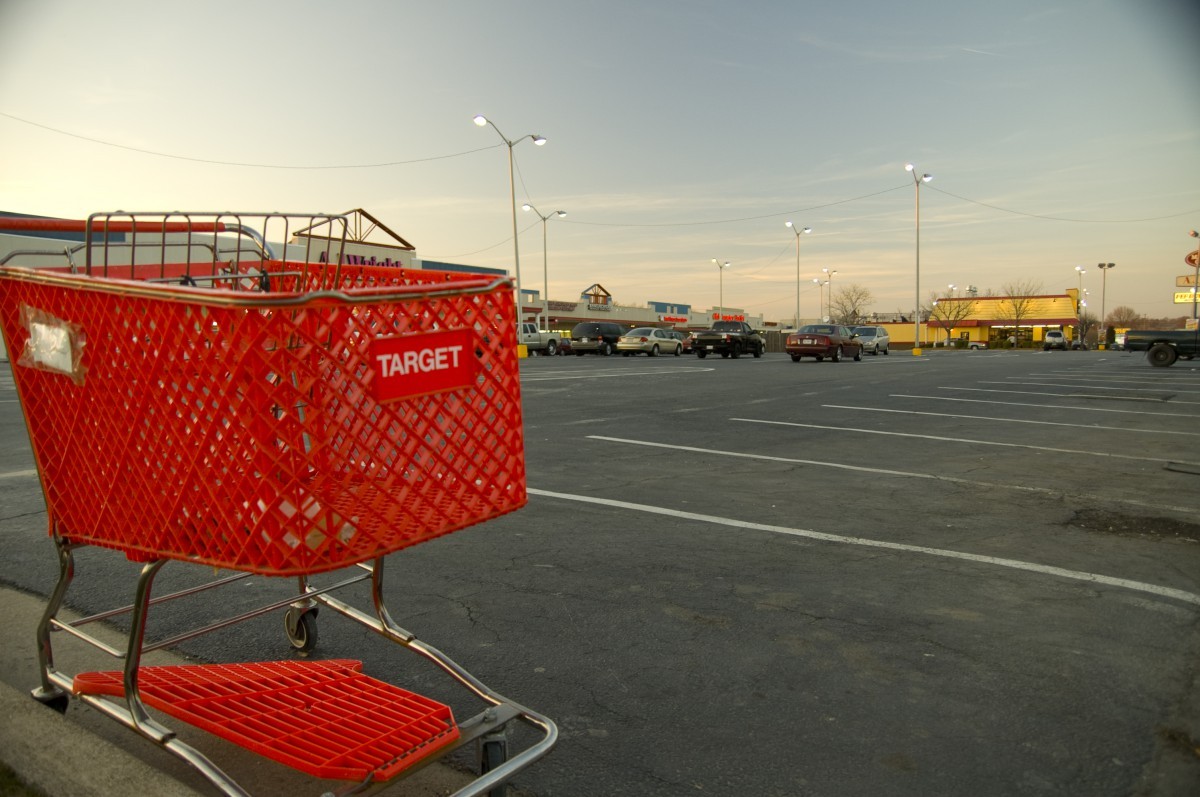
Suburbs dying?: Sales of new single-family homes are extremely slow—outside Chicago, down 90% from the peak—while townhouse sales are strong as people choose smaller and closer to work over large and distant. (NYT) ... If the future isn't in suburbs, why are policymakers cutting transit rather than investing in it? (Boston Globe)
City vs. suburb is outdated: Let's stop talking city versus suburb; since most cities have little unbuilt land but many inner suburbs are becoming more walkable and urban, the real comparison is walkable urban places versus drivable suburban ones. (TNR)
What to do about Route 1?: What should be the future of the Route 1 area of southern Fairfax, often considered "the stepchild of Northern Virginia?" Should massive freeways bypass it to get to Fort Belvoir, or should its strip malls become a walkable mixed-use corridor with a streetcar? (Connection)
SF performance parking launches, works: San Francisco's new, real performance parking system SFPark launched yesterday, with four different rates over the day and real-time apps to see parking occupancy. It's working well so far: A reporter was able to easily park near City Hall. (Streetsblog SF, Transportation Nation)
Instant Then and Nows: An iPhone "augmented reality" app, LookBack Maps, shows you historic photos of the very spot where you are standing, and lets you snap a picture overlaying the two. (The Click Heard Round the World, Stephen Miller)
Activists want both TDM and parking for Walmart: A coalition pushing for Walmart to sign a community benefits agreement released a list of demands. It includes shuttle service to Metro, transit subsidies for employees and bike sharing, but also minimums of "free or low-priced parking spaces." (WBJ, WRD)
Promoting bikes across race: People of color stand to benefit the most from bike transportation infrastructure, yet, for a number of reasons, the advocacy community has trouble engaging with minority communities to promote cycling. (Plurale Tantum)
Roof garden for the city: For Earth Day, Bread for the City is building a rooftop garden with vegetables and even beehives. Donations will help make it great. (Beyond Bread)
Have a tip for the links? Submit it here.
Comments
Bikeshare is a gateway to private biking, not competition
- Bikeshare is a gateway to private biking, not competition
- Short-term Washingtonians deserve a voice, too
- Judge denies injunction against closing schools
- Long-term closures: A solution to single-tracking?
- Public land deals have both benefits and pitfalls
- PG planners propose bold new smart growth future
- Metro policy for refunds after delays falls short, riders say
Sun May 26
11:00 am Roosevelt Ride in Greenbelt
Sat Jun 1
10:00 am CSG walking tour of Wheaton
Tue Jun 4
6:30 pm Height limit meeting at NCPC
Thu Jun 6


The three biggest impediments to implementation have been the business opposition, funding of course (mentioned in the article), and regulatory/beaurocratic snafus (not mentioned in the article).
by Froggie on Apr 23, 2011 11:09 am • link • report
First of all, I don't think people realize how huge Ft. Belvoir is. It stretches over three miles from the Potomac to Telegraph Rd., plus another section on the other side of I95. It is as big as Alexandria between the Potomac and Quaker Lane. It isn't centralized like the Pentagon so almost everyone will have to drive there. Rt. 1 and Telegraph Rd. are good enough for this purpose today, but if Rt. 1 is redeveloped in a high density fashion like Wilson Blvd., it would be crippling. There has to be a reasonable route for through traffic.
I think Crystal City has roughly the right idea with Rt. 1 acting as a through route and using parallel roads like Eads and Crystal for local access. In high density areas, vehicles should not be making left turns across Rt. 1 and pedestrians should not be walking across it. (Granted the model breaks down on the south side of Crystal City but that's because they didn't follow through with the concept sufficiently by building an underpass at 23rd like they did at 15th and 18th.)
Let's see what they can accomplish at Potomac Yard. Will they build up around Potomac Ave. (including a Metro station) and leave Rt. 1 as a reduced access road between Four Mile Run and the Monroe Ave. bridge? If they can get this right in the next decade, I would feel more comfortable with building down Rt. 1 in Fairfax.
This is consistent with my broader vision for NOVA, an infrastructure arc from Dulles Airport to Ft. Belvoir. However, in this part of the region I would like to see things built incrementally, a mile or two at a time, so that the infrastructure has a chance to keep up. The nice thing about Potomac Yard is that it is nicely constrained to a compact 1 1/4 miles. If they try to build all 7.5 miles of Rt. 1 south at once, they are guaranteed to screw it up.
by movement on Apr 23, 2011 12:11 pm • link • report
by aaa on Apr 23, 2011 1:18 pm • link • report
I'm an advocate of lengthening the Yellow Line down to Fort Belvoir, and would honestly take it beyond. On the finalized Metro100 map that was posted some months ago on this blog, I saw suggestions for stops at Groveton, Hybla Valley, Engleside, and Fort Belvoir. Those are a good start; I would continue the line on further, with at least one stop for Lorton (by the railroad station - it could potentially be a good transfer point from VRE to Metro), and at least one in Prince William County. At minimum, the terminus should be at Woodbridge, though I could see an argument for another station or two beyond that. I don't know Prince William County as well as I do Fairfax. The Fort Belvoir station would be by the new hospital, on the south side of Route 1. There would also be potential for a second Lorton station - Lorton has been growing so much in recent years that I think it could support it quite well.
Prior to all of that, however, I would suggest extending the Blue Line from Franconia-Springfield to Fort Belvoir North, to cover the new NGIS campus, which is where the bulk of the new development and traffic trouble will be. The line could then be taken down to the hospital, where eventually it should become a transfer point to the Yellow Line. Its terminus would be right there. There's certainly the potential for an intermediate station, though I don't know Fort Belvoir well enough to suggest where it would go - the intersection of Telegraph Road and the Fairfax County Parkway, perhaps? That area has always struck me as being ripe for development of some sort.
As a somewhat-incidental consideration, I would suggest a long-term plan for some kind of viable public transportation option to Mount Vernon (the house), beyond the bus from Huntington. I used to work for a tour company, and have always been surprised that there are so few package tours that take people down there; a lot of people would go if there was some kind of public option. If there was a Metro station at Engleside that could serve as a good base of operations, perhaps.
by Ser Amantio di Nicolao on Apr 23, 2011 4:39 pm • link • report
They did talk about the metro and sort of ignored it during the BRAC133 decision (Mark Center selection). Two of the Mark Center alternatives where right next to metro station (FRANSPRNG and VanDorn). But there is more to BRAC than Mark Center, about 66% more. In the recent package of funding were funds for a transit study to convert a rail spur that runs into the base near 95 and off the CSX line. Also they looked at putting in a monorail....no joke
http://www.bizjournals.com/washington/stories/2008/02/18/story2.html
by rj on Apr 23, 2011 6:59 pm • link • report
I'm on board with extending the Blue line to the new development in Springfield (just find me a funding source!), but I'm not so sure about the Yellow line. We can't afford to build transit lines just for the sake of building transit lines. You need density to support them. As I said previously, Ft. Belvoir lacks the density to support Metro. It is way too spread out. Slowly moving down the Rt. 1 corridor is plausible as part of a 20 year vision but I don't think we're capable of planning that far ahead. We're struggling to plan Potomac Yard which is supposed to be done in five years.
Mount Vernon? Are you for real? Even if it were environmentally feasible to build down there (it isn't), there is no way to have the ridership to warrant anything more than a bus. Also, Engleside is two miles away. You'd be on a bus either way.
by movement on Apr 23, 2011 10:33 pm • link • report
A $77 million dollar monorail? Who ever suggested that is on crack. That's not even the right order of magnitude.
by movement on Apr 23, 2011 10:39 pm • link • report
Which should tell you something about the people planning BRAC and running our wars....
by andrew on Apr 24, 2011 12:15 am • link • report
I know Mount Vernon's a bit of a pipe dream. But...well, put it this way: if the county COULD figure out a way to connect it to the grid, there would be a lot of tourist dollars in it for somebody. (Seriously: when I was with the tour company, probably the second-most-frequent question I got over the phone was "Do you offer a tour to Mount Vernon?") Either that, or convince more companies to offer tours out of downtown DC, which for some reason doesn't seem to work.
As to the Yellow Line: while development might not quite support it just yet, I think we're at the point in the conversation where Metro needs to be considered. There are new development projects going up at Groveton and Engleside both, and there's also the refitting of Mount Vernon Hospital coming up. (If there ever IS a Hybla Valley Metro station, it would be five minutes' shuttle ride from there to the hospital.) And Lorton is growing quite a bit. Do I want something in the next decade? Perhaps not - a 20-year-plan wouldn't be a bad idea. But I think it's time to seriously discuss extending the Yellow Line, before we miss the opportunity to take the time and do it RIGHT. (Again...I would have begun this conversation when the move to Fort Belvoir was announced - at least a Blue Line extension - but what do I know about such things?)
As to the size of Fort Belvoir, I've often thought that if the Army could figure out some way to use a lot of the scrub land along Route 1, it wouldn't be such a bad thing. But then...there's my general complaint about the Route 1 corridor: it's awfully disorganized. There are too many moving parts, and not enough of them work together. It's getting better - I remember when the Huntington area was quite the dump. But it's got a ways to go yet.
@rj:
I hadn't heard about the *snort* monorail *snort* or the water taxi - I've heard vague rumors that someone MIGHT at some point attempt a water taxi service along the river between points downstream and DC, but I seriously doubt whether that would ever happen.
by Ser Amantio di Nicolao on Apr 24, 2011 1:06 am • link • report
The Vanishing of the Bees which I saw last year seems to implicate a new form of pesticides in the vanishing of the bees. But I've also heard recently that "scientists" are concluding it's a virus. Has anyone heard anything definitive?
by Jazzy on Apr 24, 2011 8:24 am • link • report
We will see efforts to address rail's need to upgrade its existing and deteriorating infrastructure and a renewed emphasis on teleworking.
by tmtfairfax on Apr 24, 2011 8:31 am • link • report
Phone 311 to ask for the free cans before midnight and they're free.
by Tom Coumaris on Apr 24, 2011 1:48 pm • link • report
by Lance on Apr 24, 2011 3:52 pm • link • report
Did Arlington have the density to support rail when the Orange Line was built?
Short answer: it didn't.
by Froggie on Apr 25, 2011 10:44 am • link • report
That's a key point - you either need existing density to justify Metro, or you need a plan (backed by the zoning changes) to support it in the future - preferably both.
by Alex B. on Apr 25, 2011 10:50 am • link • report
Do electric streetcars accelerate better than buses?
How much would it cost to build a segregated streetcar lane down Rt 1? Would that even be a good idea?
Could you build a heavy rail line with only one station (ft. belvoir) first then build other stations later?
Rt. 1 is going to be interesting, but I'm not sure extending WMATA rail is the answer.
by charlie on Apr 25, 2011 11:01 am • link • report
Personally, I don't think the streetcar line is the best idea; for one thing, I don't see any way to do it without taking away needed driving surface on the highway. There's also the fact that I think the most viable solution would be one which is better geared to local residential areas; while there ARE some which front onto the highway, there are a lot which do not, and I'm in favor of some kind of long-term solution which makes it easier for the people who live in those to access transit.
As to the second point, I was actually thinking about exactly the same thing just yesterday. That would take care of the most pressing problem. Though again, I'm in favor of extending the terminus at least ONE station past Fort Belvoir (for one thing, I think a terminus station should have ample parking for anyone who is coming from out past it - like Huntington does now - and I'd be wary of including that kind of parking on a federal installation, due to potential security concerns).
Incidentally, as to the density question, I remember a time when neither Huntington nor Eisenhower Ave. had nearly the density required to support the current stations. For that matter, my father and I used to laugh whenever we'd pass through Eisenhower on the way into town, wondering who in his right mind suggested a Metro station there. And look how THAT'S turning out...
by Ser Amantio di Nicolao on Apr 25, 2011 11:31 am • link • report
Ok, but you started in the paragraph before this one...
On US-1 in Fairfax: That needs to become an area like Rosslyn/Ballston, or Pentagon/Reagan. They can start by putting apartments and condos on top of all the shopping, like they're going to in Springfield.
The Yellow Line needs to be extended along Kings Highway, US-1 to Lorton, Woodbridge, and in a subsequent phase onto the Prince William Parkway along Potomac Mills onto Manassas and then along VA-28 via Centreville and Chantilly to Dulles connecting to the (extended) Orange and Silver Lines.
by Jasper on Apr 25, 2011 1:16 pm • link • report
Yes, electric traction (in general, whether electric bus or streetcar) can accelerate faster than Diesel. They also produce more torque - that's the main reason for the electric trolleybuses in places like Seattle and San Francisco - climbing hills.
I'm not sure of the cost of dedicated lanes - it would depend on how dedicated they are. Grade separation at intersections? Etc.
Building the line first and then adding infill stations is certainly technically possible, but I'm not sure it would actually save much in terms of cost (adding a station later, even if you plan for it, is almost certainly more expensive than building it from the start) and I don't see what policy benefit you'd reap from it.
by Alex B. on Apr 25, 2011 2:04 pm • link • report
I do hope GGW focuses more on Rt.1.
by charlie on Apr 25, 2011 4:23 pm • link • report
I would think that dedicating lanes to buses would be a good interim step. I'd also want to check some of the origin/destination analysis, but I'd be skeptical of a streetcar on that corridor given the long distance from the core and the fact that you'd require a transfer to Metro if going further in towards DC.
I also think that connecting back to VRE and 95 is key - and then you're talking about a 12 mile corridor from Huntington Station to Lorton. That's awfully long for a streetcar, especially considering the current land use patterns and walkability along the route.
by Alex B. on Apr 25, 2011 7:09 pm • link • report
by Froggie on Apr 26, 2011 11:54 am • link • report
We will see efforts to address rail's need to upgrade its existing and deteriorating infrastructure and a renewed emphasis on teleworking.
by tmtfairfax on Apr 24, 2011 8:31 am
-----------
I think you're losing the forest for the trees here. Yes, the almost 25 mile Silver Line extension is proving to be a monumental headache. However, that's a massive expansion project going through the major international airport of the capital of the United States. Given the intense and intricate planning and complex layers of bureaucracy involved there's no way it was ever going to be any different. I'm not sure that other expansion projects if they're carefully planned and spaced out over time would necessarily have to be as cumbersome. Metro out to Ft. Belvoir is almost inevitable in the long-term. Streetcars, dedicated buslanes and the like simply won't have the scale to absorb the coming demand and the traffic on the roads will become a security concern for workers at the base. I think an exciting opportunity that while may not turn Route 1 into the R-B corridor could at least provide a great economic spark.
Yes, we need to graduate our thinking back into more maintenance as the system is maturing and not every expansion idea will necessarily make it past the drawing table (Orange Line extension to Centreville or Manassas seems much more unlikely). However, simply burying our collective heads in the sand about expanding transit needs is not the answer either. We can either try to get ahead of the curve or continually react to transit only when traffic hits well past our breaking points and is far more expensive, complicated and time-consuming.
by Mike O on Apr 26, 2011 12:15 pm • link • report
Regarding expansion: I agree that there has to be a finite limit. Orange Line to Manassas would be unlikely; I've heard a suggestion to bring the Orange Line to Oakton, which is about as far as it should be considered, I think. Much farther, and VRE begins to become the more attractive long-haul option, and there's no reason that can't be expanded further. Should be, in fact; we ought to be reconsidering the purpose of some of the local rail lines. There should be at least one more connection with VRE outside of DC; I wish Alexandria would figure out some way of providing access from Union Station to King Street station, because I think that would cover it.
@tmtfairfax:
WMATA's incompetence notwithstanding, I suspect many people recognize that it's an evil we must live with, given that the alternative is so awful. Try going on Route 1 during a normal day, even now (without BRAC traffic); it's insane. Far worse than it was a decade ago. And there's really no other place for BRAC traffic to go, except for Telegraph Rd., which won't be much better. Streetcars and buses won't do the trick, as they're going to get mixed in with a lot of that traffic and be subject to its vicissitudes. Metro might not be a pretty choice, but it's still the best for the area.
@charlie: I do agree; I'd love to see more coverage of the Route 1 corridor. It's changed a great deal in the past twenty years, and it's interesting to think where it's going to go from here.
by Ser Amantio di Nicolao on Apr 26, 2011 12:34 pm • link • report
Add a Comment