Links
Breakfast links: Welcome and unwelcome guests
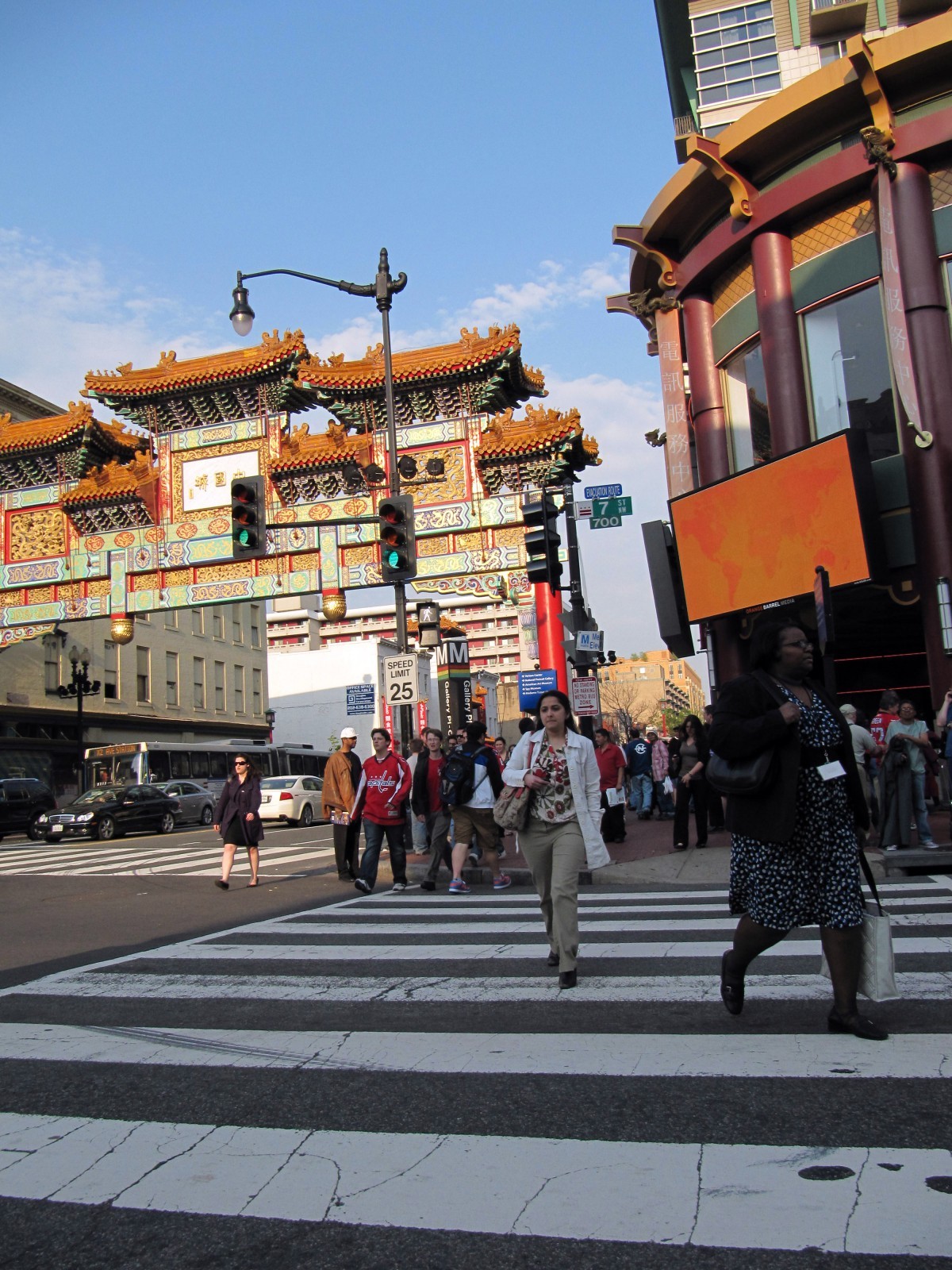
Developer wants bus stop gone: A developer who installed a "mosquito" device at 7th & H in Chinatown recently asked the city to eliminate the adjacent X2 stop "to reduce sidewalk congestion and repeated criminal activity." (City Paper)
Wells wants DC United to stay: Tommy Wells wants city officials to find a way to keep DC United in DC. (Examiner) ... Like Mayor Gray's statement on luring back the Redskins, Wells didn't specify whether DC should commit public money.
What to do with Union Station? Tour buses?: A lot is happening around Union Station, but a plethora of agencies and scarce funding stand in the way of making it truly great. It also kicked out tour buses to accommodate intercity buses, but where will the tour buses park while kids are touring? (City Paper)
DC United not considering Prince George's: County officials are looking into building a lacrosse stadium that could double as a soccer stadium for DC United. DC United, however, says they're only looking for new locations in DC and Baltimore. (Examiner)
Inflation applies to Dulles tolls: To fund the Silver Line, tolls on the Dulles Toll Road, like everything else in the economy, will rise annually for decades hence. (Examiner)
Protest updates: Some Occupiers are staging a hunger strike to protest DC's lack of voting rights and budget autonomy. (HuffPo, Ryan M.) ... Police arrested more than 70 protestors yesterday for blocking traffic on K St. (Post)
Cyclists' Ed. comes to elementary school: WABA gave safety and riding tutorials to Stoddert Elementary students last week. Program is funded through DDOT under the Safe Routes to School Program. (Georgetown Patch)
Test scores and the achieve gap rise: Test scores at DCPS are up, but among the nation's urban school systems, DC suffers the widest achievement gap between white and black students. (Washington Times)
And...: One London entrepreneur has assembled shipping containers to create a pop-up mall. (CNN) ... DC will add 4,000 housing units this year, but is that enough? (Forbes) ... Government officials can avoid FOIA by using their personal email accounts. (City Paper)
Have a tip or undesired bus stop for the links? Submit it here.
Comments
Community stories show the shift to a walkable lifestyle
- Community stories show the shift to a walkable lifestyle
- Focus transportation on downtown or neighborhoods?
- Young kids try to assault me while biking
- Some are pushing to limit sidewalk cycling
- Where is downtown Prince George's County?
- Endless zoning update delay hurts homeowners
- Metro bag searches aren't always optional


Is 4,000 enough? Definitely not.
by Redline SOS on Dec 8, 2011 8:33 am • link • report
by Lucre on Dec 8, 2011 8:56 am • link • report
by dano on Dec 8, 2011 9:01 am • link • report
Those who point to generational poverty, but ignore the effect of family habits and cultural norms, do a disservice to children.
The only way forward may be boarding schools.
by jkl on Dec 8, 2011 9:05 am • link • report
Tolls will increase at the main-line toll plaza from $1.25 to $1.50. That's a 20% increase (year over year). From October 2010-October 2011 year over year CPI-U inflation (trust me on these numbers, I work with them all day [this measure includes food and energy]), was 3.6%.
I would say that the tolls are increasing *a bit* more than inflation.
by Nick on Dec 8, 2011 9:06 am • link • report
What they're doing now is like over taxing a homeowner (or renter) so that the person who'll be living there in the future can get a better deal on the place. It's inherently unfair.
by Lance on Dec 8, 2011 9:30 am • link • report
by Fitz on Dec 8, 2011 9:38 am • link • report
Right, I agree. Local governments are unwilling or unable to directly fund the Silver Line (which I think is a white elephant, but that's a whole different story). So they attack their captive audience: the thousands of people who use the toll road to commute daily. Of course, I feel that many on this blog will say "these people made the choice to work out there and have a driving commute." As a person who works in the economics field, I realize that not everyone has the choice to work in the city and live in a walkable environment - people take jobs where they can get them, especially in a labor market such as this. My wife and I are prime examples - She uses the toll road, I use the metro. We are forking over a lot of money for the silver line that will be of no use to her commute (she commutes in reverse on it, there is no way for her to get from a station (phase two) to her job). I have a right to complain about this, because she can't just "get a different job" where we don't have to use that road. The labor market sucks.
by Nick on Dec 8, 2011 9:41 am • link • report
by OX4 on Dec 8, 2011 9:41 am • link • report
by Ben on Dec 8, 2011 9:43 am • link • report
by AWalkerInTheCity on Dec 8, 2011 9:47 am • link • report
The better thing would be to charge the higher tolls to the commuters going in the predominant direction and exempt the reverse commuters, since their lanes aren't likely congested anyway (?). In fact the best thing would be variable tolls to reflect congestion conditions.
by AWalkerInTheCity on Dec 8, 2011 9:49 am • link • report
Do you know with certainty that her employer won't put a shuttle bus in place once the extension is complete? I have a feeling a lot of employers will be doing this. You see this a lot in Tenleytown for example, there are shuttles to Fannie Mae and the DHS facility.
by Phil on Dec 8, 2011 9:50 am • link • report
1. developers still face financing issues. And product coming on stream now had to have been financed several years ago, when things were worse.
2. Zoning aside, its not easy assembling land in center city locations
3. Theres a huge amount of new housing near metro in very close in "suburban" locations in metro DC, including Arlington, Alexandria, and silver spring. Not in "random villages"
4. Density in central DC is limited by height limits that have little or nothing to do with Kunstler
5. At the same time that the college educated young are leading the charge to the dense city areas, the poor and working class african americans (like poor and working class both black and white in other cities) are continuing to depart. SOME of the demand from college educated young for housing in DC is being absorbed by the shift in usage of the existing housing stock.
by AWalkerInTheCity on Dec 8, 2011 9:58 am • link • report
B. I think its perfectly fine to charge the drivers, my spouse also reverse commutes on the toll road while I metro and I'm fine with helping to pay for the construction because the benefits it'll bring to the region as a whole.
by Canaan on Dec 8, 2011 9:58 am • link • report
In much the same that those who choose not to drive are being used to pay for the construction of highways and roadways that they don't use? This comment really gets to the fundamental question of whether roads and highways should be the only form of transportation funded in this country, since roadways are far and away the most heavily subsidized form of transportation.
And never mind the fact that those drivers who do not use the Metro still benefit from its existence since it removes vehicles from the road. (After all, if people are simply "choosing" not to drive, then the alternative to taking the Metro would be simply hopping in one's vehicle.)
by Ben on Dec 8, 2011 10:02 am • link • report
That point struck me as well. It's as if anything outside of the District's political boundaries doesn't count towards the goal of providing housing for people in the region. There's seemingly a new condo building announced in Arlington every week. And the number of new residential buildings planned near the White Flint Metro are legion, to name but a couple of examples. Those aren't "random villages" at all, it's focused, planned development.
by Ben on Dec 8, 2011 10:06 am • link • report
by Canaan on Dec 8, 2011 10:20 am • link • report
That would be great, but she works at a school that would be a few miles from one of the stations west of Dulles (which won't even be operational until 2017 or so).
We don't mind paying steep tolls to support public transportation. My wife is enthusiastic about it because it will make her commute less crowded (believe it or not, a lot of people commute in reverse on the toll road [inside beltway ---> tysons/reston/herndon/dulles]). However, I don't like the silver line because it's sprawl-oriented rail. The stations will all be like Vienna or Shady Grove - giant parking lots with hundreds of buses shuttling people back and forth and a few walkers from overpriced apartments near the metro. If you drive around the areas where the new stations will be built (west of tysons), you will see what I mean. Its traffic lights, 6 lane arterial roads and strip malls. Even the people who live 1/2 mile away from a place like Reston/Wiehle avenue will drive to the metro.
I think the expense to build this rail line would have been put to much better use building something elsewhere (columbia pike, another downtown route, any of those other inter-city options on the "dream" metro map).
by Nick on Dec 8, 2011 10:24 am • link • report
That's not how a lot of people think, though. I'm afraid some people would rather live in a toll-booth society where we pay for what we consume and that's it w/ no concern for society as a whole.
"In much the same that those who choose not to drive are being used to pay for the construction of highways and roadways that they don't use? This comment really gets to the fundamental question of whether roads and highways should be the only form of transportation funded in this country, since roadways are far and away the most heavily subsidized form of transportation."
That's the hypocrisy of it all. Roads are different from rail, but some people have disproportionately different expectations w/ respect to economics when it comes to roads. In Virginia at least, it makes no sense to let transportation infrastructure languish while the gas tax is ridiculously low and isn't really indexed to anything.
by Vik on Dec 8, 2011 10:26 am • link • report
Basically MWAA wanted to build this to Dulles so it was a gift to Fairfax because they're getting a lot of construction and a chance to fix a lot of mistakes as best as it can. Though I think we should definitely ramp up calls for a separated blue line as well.
by Canaan on Dec 8, 2011 10:31 am • link • report
I agree that DTR tolls shouldn't have been used for such a large part of the financing for the Silver Line. The primary beneficiaries of the Silver Line are the land owners within 1-3 miles of the new stations, and to a lesser extent, land owners close to all of the existing stations the Silver Line will serve. Those land owners will see a significant bump up in the value of their land from the Silver Line. So, the fairest form of financing would be imposing a special tax district that captures much of that bump in land value.
That said, special tax districts are hard to impose because that's seen as raising taxes. Raising tolls isn't seen as raising taxes. To the extent that DTR drivers are also land owners near the stations, the toll is an approximation of the much fairer special tax district.
The bottom line, though, is that it's not fair for all of Fairfax to pay for a substantial portion of the Silver Line that gives a nice payday to a small subset of residents.
by Falls Church on Dec 8, 2011 10:32 am • link • report
That won't be true of the four Tysons stations which will not have any parking.
But, I think we need to step back and understand that the starting point is not the Silver Line or even rail to Dulles. The starting point is transformation of Tysons into an urban, walkable, node. The Silver Line is just one of the many projects designed to make that very worthy goal possible.
With the Silver Line and Tysons transformation, Tysons is set to absorb over half of all job growth in Fairfax in the coming decades. That's a sprawl mitigating plan, not a sprawl inducing one.
by Falls Church on Dec 8, 2011 10:45 am • link • report
The one source of money MWAA seems completely intent on not touching, that also happens to make the most sense is a surcharge on the plane tickets in/out of Dulles. Every airport authority in the world tacks on a couple dollar surcharge when they need to raise money for improvements, yet the DIRECT beneficiaries of this thing aren't being asked to contribute a nickle.
With 24 million passengers in and out of Dulles every year, it wouldn't take much of a surcharge to pay for this.
People can get out their pitchforks and yell about drivers needing to help foot the bill, but this damn near twiced priced project on a REGIONAL transportation system isn't the responsibility of a few hundred thousand commuters from Loudoun and Fairfax County residents. Metro is a regional transit system and if we decided as a "region" to expand metro, then the region (VA/MD/DC) should all contribute.
We wouldn't be doubling the tolls on the ICC to pay for a new metro station on the Orange line now would we?
This is a clear case of the few being asked to fund something for the many.
What they are doing is assesing a demographic that has nothing to gain, the entire cost of something they won't use. The transportation studies have concluded the same thing, the percentage reduction in traffic on the DTR after the silverline is in the +/- margin of error. It would be like specifically assesing every Arlington County CABI member an additional $500 bucks a year to pay for the DC Streetcar system. Will some Arlington residents use the system at somepoint in the coming decades? Sure, but the cost to that specifc population of people far outweighs the benefit, if there is one.
I'd be furious if I was a Loudoun County resident who had to drive to Tysons for work every day.
by freely on Dec 8, 2011 10:54 am • link • report
That actually sounds like a huge win to me, considering the massive population and job growth predicted for the area over the next 25 years. If the Silver Line can manage to keep traffic at present levels despite all that growth then it will have served its purpose.
by Phil on Dec 8, 2011 11:07 am • link • report
No question the revenue is there -- espcially to build the underground station at dulles -- but in terms of "fairness" I think your argument is off.
I'd suggest a several dollar surchage at each Silver Line station -- that should solve the financing problems. Ridership? Well, we all know that in 10 year we won't have any gas so people willl pay any price to ride metro. Or something like that...
by charlie on Dec 8, 2011 11:15 am • link • report
District taxpayers have spent the last six decades subsidizing enormous, pedestrian-unfriendly, resident-unfriendly roads, and dealing with the hassles they create, for the convenience of suburban commuters who pay no taxes in the District and don't live here.
Now one thing happens where suburban commuters will actually subsidize District residents just a bit, and you whine and whine about the unfairness of it all.
by dal20402 on Dec 8, 2011 11:33 am • link • report
I use the local metro/commuter train whenever I go somewhere that has one. So far that's been Barcelona, Brussels, Munich, SF, Portland, and Paris. And I will use the Silver Line every time I fly out of Dulles. It seems the time to get between downtown and the airport will be about on par with my other experiences; it will drop you right in the middle of downtown (with perhaps one transfer which isn't too unusual); etc.
2010 there were 23.7 million passengers at Dulles. A couple bucks per ticket would pay for a good chunk of the Silver line.
by RDHD on Dec 8, 2011 11:44 am • link • report
I agree, why say "very few airline passengers will be using the Silver Line"? And he says it as if it's done and done. I'll use the Silver Line to get to Dulles.
by dc denizen on Dec 8, 2011 11:48 am • link • report
I do think it will be used by plane passengers, probably more than some here are anticipating. But I still think the overwhelming number of passengers will travel to and from the station via automobile.
by Ben on Dec 8, 2011 11:53 am • link • report
by Alex B. on Dec 8, 2011 11:54 am • link • report
You completely misunderstood. What the numbers show is that "the day" after the thing opens, it won't reduce traffic on the DTR at all, or anything more than a few percent.
It isn't (as you seem to think) acting as a huge pressure release valve that will divert all future DTR traffic elsewhere.
Having the DTR drivers literally fund 50% of this thing could be more palatable if when opened, reduced current traffic volume by an appreciable amount, but it isn't, and won't.
by freely on Dec 8, 2011 12:17 pm • link • report
But won't their property taxes increase accordingly ... i.e., the land value goes up because of the proximity to the stations (or promised proximity) as soon as the news gets out ... which in turn pushes up the value of the property as reflected in increased selling prices ... which then increases the assessed value ... resulting in increased taxes on the landowners. So, isn't what you're proposing effectively taxing them twice for the same service?
by Lance on Dec 8, 2011 12:19 pm • link • report
by Bossi on Dec 8, 2011 12:22 pm • link • report
Wow ... The bad assumptions you're making to reach an illogical conclusion are just too many to address. Let's just put it this way. I use that road west bound every day to get to work and I am a District resident.
It sounds like you're maybe living a very old fashioned (19th century) existence and spending every part of every day within the District ... or only where the limited lines of mass transit can take you? Sad. I feel bad for you. There's a whole world out there of which the District is only a very very tiny part of. Go out and explore. It'll (hopefully) broaden your horizons.
by Lance on Dec 8, 2011 12:25 pm • link • report
by egk on Dec 8, 2011 12:34 pm • link • report
Actually, there already is another bus stop one block to the east of 7th and H, on the same physical block as the current one. So, unless you want two bus stops right next to one another, it would be impossible to move the stop, therefore it would have to be removed.
by MDE on Dec 8, 2011 12:35 pm • link • report
The bulk of commuters using the Dulles Toll Road live in the suburbs. (Not many people work out there and choose to live in the District and pay the resulting housing prices; for some strange reason, even though you appear to prefer the suburban lifestyle, you do.) Many of them are commuting to the District; others are commuting to Arlington, Tyson's, or other suburban points. Thus for the most part it is suburban commuters paying the tolls.
Silver Line ridership will be bidirectional. It will take large numbers of DC and Arlington residents to Tyson's and the airport, while also taking large numbers of commuters from the toll-road stops to their jobs in Arlington or the District.
So, statistically, suburban commuters are subsidizing Silver Line riders, who will be a mix of suburban and urban residents. Your one data point doesn't change that.
And, no, most District residents don't get much benefit from 16th Street NW, Pennsylvania Ave SE, and the like being built as six-lane superspeedways that you risk your life to cross--or from freeways separating the Kennedy Center from the city, turning the Georgetown waterfront into an ugly industrial mess, ruining the beautiful parkland next to Arlington Cemetery, or bisecting downtown. Those roads represent a huge gift from District residents to the suburban commuters who overwhelmingly use them.
by dal20402 on Dec 8, 2011 12:52 pm • link • report
you left out Connecticut Ave.
by Tina on Dec 8, 2011 12:56 pm • link • report
Lance, I'm curious--not to pry too deep into your business, but will your job be reasonably accessible to one of the Silver Line stations once it's completed? If so, would you consider using metro? One of the things I'm most interested in seeing is what the DC/Arlington reverse commuters who work in Tysons and beyond will do given the availability of rail. After gas costs, toll road costs, depreciation costs, and potential parking costs, even a $4-5 metro ride each way will likely be less expensive, and the time spent may be pretty close. Anybody else in a similar situation?
A friend of mine reverse commuted from Clarendon to a tech job out by Dulles for a couple of years, and even then was often frustrated by 40-50 minute return trips at the end of the day. I expect the two-way transportation soon to be offered by locations in the core of the city and Arlington will make appealing locations near metro stops even more appealing once at least Phase I is finished.
by HooShotYa on Dec 8, 2011 1:00 pm • link • report
But without enforcement, the new rules will be flaunted. Just like the bus parking rules on Maine Ave SW are flaunted every day, and 100 times a day during Cherry Blossom time. MPD actually has a "commercial vehicle enforcement" unit (or at least one vehicle with those markings), but you will never see them actually writing tickets or inspecting dilapidated tour buses belching smoke all day while the driver sleeps inside.
by dcdriver on Dec 8, 2011 1:39 pm • link • report
by Rich on Dec 8, 2011 3:02 pm • link • report
FTA: "Built entirely from recycled shipping containers, the "Boxpark" retail hub in London claims to be the first pop-up shopping mall in the world."
The Boardwalk at the Kandahar Air Base beat him to it by at least five years.
http://www.flickr.com/photos/pritheworld/galleries/72157623617934005/
by Kolohe on Dec 8, 2011 3:08 pm • link • report
Of course, since county officials are insisting that the homeless shelter have an entrance hidden away from the other users of the building, they could be accused of "NIMBYism" as well.
by Arl Fan on Dec 8, 2011 3:21 pm • link • report
The increased taxes from appreciating property values won't be sufficient to pay for the line. Adding an extra tax to fund the line will still leave land owners with a nice profit. Below is an example story of a Tysons land owner making a killing off the Silver Line...shouldn't we tap into that profit to help pay for the line?
In the summer of 2009, West-Group then the single-largest landowner in Tysons Corner devised a plan to cash out of its real estate holdings in one fell swoop: It would sell 24 buildings on 142 acres in Tysons...West-Group was subsequently inundated with a flurry of interest from institutional investors and regional developers who wanted to expand their presence in Tysons. The portfolios popularity stemmed from the fact it has the redevelopment potential of several million square feet because of a Fairfax County land use plan that would allow far greater densities around the four new Silver Line Metro stations under construction in the otherwise traffic-clogged area. The countys Board of Supervisors approved that visionary mixed-use plan in June 2010.
Just a month later, West-Groups portfolio had a buyer: DLJ Real Estate Capital Partners, an entity of Credit Suisse Group AG. The deep-pocketed financial services group plunked down $222 million in cash to scoop up what remained in the portfolio. Local brokers say West-Group lowered the sale price after Fairfax County supervisors approved less density than developers had originally envisioned in the area.
Before 2010 was up, DLJ surprised the market again by selling seven of the buildings for $140 million, after owning them for about five months. DLJ strategically kept the eight buildings closer to the new Metro stations that are prime redevelopment targets under the new plan for Tysons Corner, which is slated to become a walkable, mixed-use city centered on the Silver Line during the next few decades.
by Falls Church on Dec 8, 2011 3:23 pm • link • report
There's only a tenuous nexus for Dulles airport passengers, 1/3 of whom are just connecting anyways. TRB published a report on airport transit in 2008 (ACRP #4), and only National (13%) has a >10% rail mode share of airport traveler trips. Chicago O'Hare is as far from downtown, time-wise, as Dulles will be (about 50 min.), and only 5% of travelers use rail to get there. 20% of O'Hare employees take rail, though.
Also, I am puzzled as to how Stephen Smith from Forbes -- whom I don't disagree with most of the time, but who doesn't seem to have an extensive background in urbanism -- has the idea that Kunstler's peak-oil paranoia is what New Urbanism is about, or that NU has anything to do with the 1910 Height Act or with local NIMBYs.
by Payton on Dec 8, 2011 3:29 pm • link • report
by Payton on Dec 8, 2011 3:32 pm • link • report
Not quite: including start and end, dulles-metro center will be 19 stations. http://upload.wikimedia.org/wikipedia/en/b/b3/WMATA_Thin_Silver_Line_Map.jpg
Keep in mind, phase one only goes to Reston/Wiehle. This will be open for service in late 2013 at the absolute soonest. Phase two isn't even under construction yet - we will be riding rail to dulles in 2017 at the absolute earliest.
by Nick on Dec 8, 2011 3:36 pm • link • report
"District taxpayers have spent the last six decades subsidizing enormous, pedestrian-unfriendly, resident-unfriendly roads, and dealing with the hassles they create"
----
Where are the "enormous" roads in DC?
PLEASE tell me. I'm missing out, since I'm always fooling around with the narrow congested streets, the I-395 stumps, and NY Avenue.
by ceefer66 on Dec 8, 2011 4:58 pm • link • report
----------
And the rest of us have spent over 40 years subsidizing the most costly to construct subway system in the US. All while more highways were cancelled than were built because "we don't need freeways if we have Metro".
So your point is...?
by ceefer66 on Dec 8, 2011 5:03 pm • link • report
by Ted on Dec 8, 2011 5:18 pm • link • report
Metro attracts at least as many suburban residents as city residents. Granted, they use it only to commute, but commuting is the really big transportation problem. The suburbs are hardly "subsidizing" Metro, except for Phase II of the Silver Line.
As a resident of the District, I'm very glad those highways were canceled. They would have taken what is left of our city and made it into an uninhabitable concrete wasteland, like you already have around the Kennedy Center, by the Georgetown waterfront, and in the I-395 corridor.
Where are the "enormous" roads in DC?
The below are just the ones that divide neighborhoods and make it hard for residents, in order to cater to suburbanites who don't contribute to our tax base. There are also many others that are more productive for locals.
I-66 stub
I-395 stub
I-295
North Capitol Street
South Capitol Street
New York Ave NE
Pennsylvania Ave SE
Connecticut Ave NW
Wisconsin Ave NW (from Glover Park northward)
16th St NW (north of downtown)
14th St NW/SW (south of downtown)
All built like speedways without meaningful pedestrian safety measures.
by dal20402 on Dec 8, 2011 5:27 pm • link • report
The argument for punching holes and eliminating an interesting dining option on the ground floor, in order to route more people to the basement, is bewildering. At meal times, the food court is already full of customers.
by Turnip on Dec 8, 2011 5:56 pm • link • report
by Turnip on Dec 8, 2011 6:21 pm • link • report
What dal20402 said. Metro rail is predominately focused on getting suburban commuters into and out of the city. The idea that it's an example of "the suburbs subsidizing the city" is laughable.
You can think metro rail for the fact that anyone can get anywhere by private car in the Washington metro suburbs during the hours of 7am and 7pm on weekdays.
I would love to see the Metro rail system shut down for a single workday, just as a consciousness-raising exercise for suburban folks who think they get no benefit from it.
by oboe on Dec 9, 2011 9:40 am • link • report
Once again, your tendency to see this as DC vs suburbs, rather than urbanism vs sprawl, blinds you to real political conflicts in the suburbs, and to potential prourbanist allies.
by AWalkerInTheCity on Dec 9, 2011 10:05 am • link • report
hmm. On the fairfax county parkway? On rte 28?
Suburban commuting includes far more than the arterials into DC like i395 or i66.
by AWalkerInTheCity on Dec 9, 2011 10:08 am • link • report
I'm pretty aware of prourbanist allies (for whatever my validation is worth) and generally consider Old Town, "near" Arlington, Bethesda, Silver Spring, and the like to be effectively "urban DC", not the suburbs. I try to be pretty clear on the distinction between "DC as a political entity as distinct from the surrounding political jurisdictions" on the one hand, and "the divide between areas of urban / suburban form" on the other hand.
Just wanted to point out that there's an often overlooked case that Metro rail system is the only thing that keeps the regional road transportation network from total collapse (obviously this cuts both ways, but no one's arguing that "roads" are a frivolous expense). I think many, many folks living in the suburbs--especially in the urban close-in areas--understand this. But the counter-narrative is pretty attractive and ingrained, and is really harmful to transit funding in general.
In that sense we're all in this together. Turning Metro "off" for a day would really drive that point home.
by oboe on Dec 9, 2011 10:51 am • link • report
Let's turn it off for a day, and we'll find out. :)
Maybe you're right, but I think the ripple effects aren't immediately obvious.
by oboe on Dec 9, 2011 10:58 am • link • report
I-395 stub
I-295
North Capitol Street
South Capitol Street
New York Ave NE
Pennsylvania Ave SE
Connecticut Ave NW
Wisconsin Ave NW (from Glover Park northward)
16th St NW (north of downtown)
14th St NW/SW (south of downtown)
All built like speedways without meaningful pedestrian safety measures."
-------------------
The I-66 stub, I-395 stub, and I-295 are freeways. Pedestrians are rightfully prohibited.
As for the other streets you mentioned, they all have stoplights and crosswalks, so saying they were built like "speedways" is a bit of a stretch. The Champs Champs-Élysées in Paris and Canal Street in New Orleans are wider than any strett in DC. Would you call either of them a "speedway"?
I'll be the first to agree that many drive too fast on DC's commuter routes. However - and I know I'm stepping on toes here - that's the consequence of killing all of the planned freeways - the reason why I66 and I395 are "stubs".
Not saying they should have plowed over the entire city. Some freeways like the Three Sisters - I-266 Loop were terrible ideas - Dupont Circle, U Street, Shaw and other areas would not exist today if the Loop had been built. But not completing I-95 through NE and the failure to connect I-395 with Route 50, the BW Parkway and and I-295 have had horrendous results. Thanks to that short-sighted decision, commuter traffic that belongs on a highway is on DC's streets. creating congestion, pollution and safety hazards.
BTW, except for I266, none of the routes I mentioned would have "destroyed" anyone's neighbordhood.
by ceefer66 on Dec 9, 2011 2:07 pm • link • report
There will be an additional $260.00 to pay per year for us as of the first of the year but we have been told to expect annual increases. If you don't do the math you don't know that you are subsidizing the Metro instead of going on family vacation each year. I've dropped magazine subscriptions to save money. This increase isn't small potatoes.
The Metro was built throughout the Metropolitan area with my tax money. Why should I have to subsidize it without the entire region feeling the same pain? I didn't ask to get money from Falls Church residents when their property values increased. There will be no traffic benefit and the cost in time and money to ride the Metro does not offer a feasible economic substitute for me, and I've done the math.
by feeride on Dec 28, 2011 12:20 pm • link • report
Add a Comment