Links
Breakfast links: Here comes the train again
Crack is whack for Metro: Two early morning rail cracks caused delays yesterday on Metro. The cracks were caused by the cold weather and not the aging infrastructure. (Examiner)
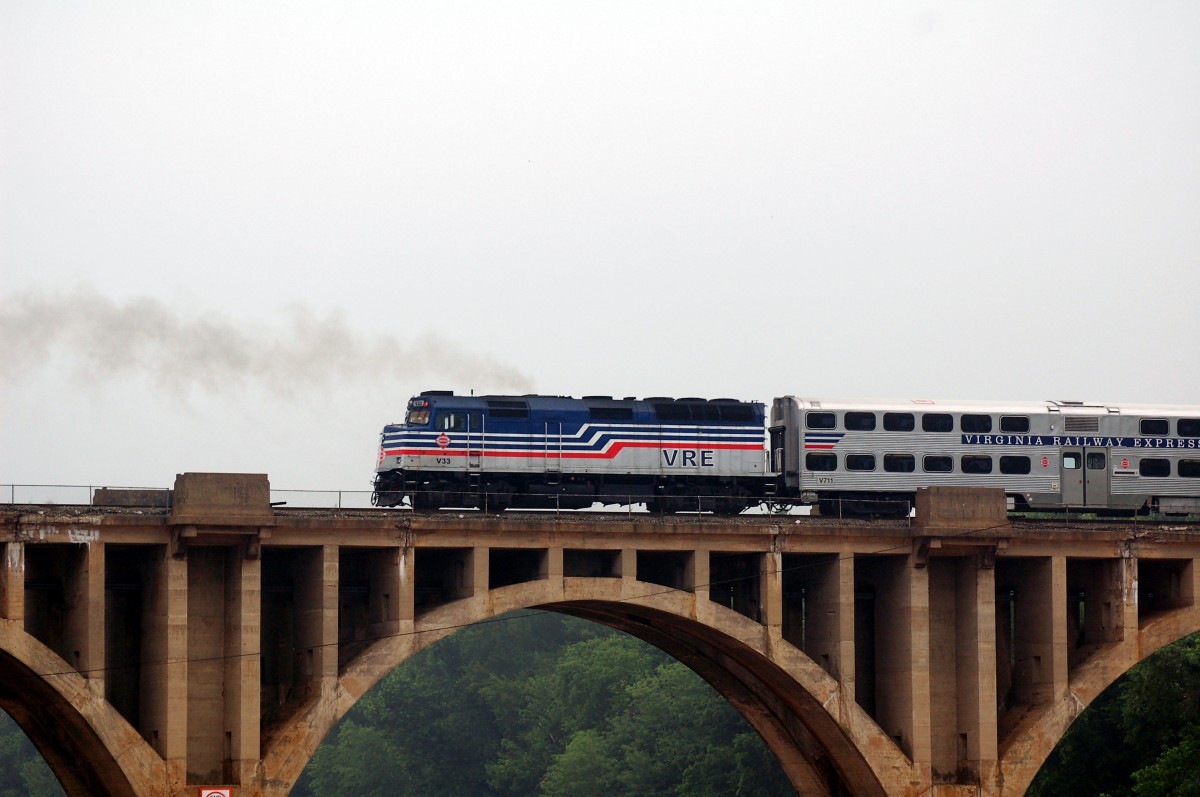
VRE going without Wi-Fi: VRE is backing off from plans to offer Wi-Fi on its trains. It was originally planned for 2011, but now it might not happen in 2012 due to funding constraints. (Examiner)
Brookland development gets ANC OK: The Colonel Brooks Tavern mixed-use project in Brookland won ANC approval. Supporters overcame devoted opposition to convince ANC 5A to approve the project. (City Paper)
Traffic studies unbelievable but true: Neighbors often don't believe traffic consultants when they say new development will cause minimal new traffic, but those consultants are counting on mixed uses, transit, and changing behavior. (City Paper)
CaBi may soon get ads: DDOT officials are working on getting corporate sponsorship for CaBi. Any advertising would only be on DC stations and bikes, as Arlington can't legally fund the system through corporate sponsorship. No word on how DC bikes crossing into Arlington will be handled. (HuffPo)
Emergency pedicab regulations permanent: DDOT is now enforcing emergency pedicab regulations indefinitely. Pedicab groups say the regulations, supposed to expire after 180 days, were made permanent without any consultation. (TheWashCycle)
A strong core is key to health: A study by the Cleveland Fed suggests cities that maintained their downtown density had economically healthier regions than cities whose downtowns emptied out. (Streetsblog)
And...: Now you can play PlanMaryland. (Smart Growth Maryland, Jaime Fearer) ... Between 2007 and 2010, the average car buyer age jumped from 52 to 56. (AOL, Matt Johnson) ... 2011 was not a great year for Ward 5. (RPUS)
Have a tip for the links? Submit it here.
Comments
Latest Metro map drafts add Anacostia parks and other tweaks
- Latest Metro map drafts add Anacostia parks and other tweaks
- Bikeshare is a gateway to private biking, not competition
- DC Council makes major policy changes overnight
- Short-term Washingtonians deserve a voice, too
- Public land deals have both benefits and pitfalls
- Parklets give every block a little park
- Judge denies injunction against closing schools
Sun May 26
11:00 am Roosevelt Ride in Greenbelt
Sat Jun 1
10:00 am CSG walking tour of Wheaton
Tue Jun 4
6:30 pm Height limit meeting at NCPC
Thu Jun 6


Yes, the 1968 riots emptied good parts of the east side. But of lot of the population transfer, especially post war, was moving out of multi-family single houses. School intergration -- or rather busing -- was the final blow.
RITA and the Cleveland tax probably didn't help the situation. And the "Economnic Development" team in Cleveland was pretty weak -- they had the silly notion of bringing in stuff like Walmart would help.
by charlie on Jan 5, 2012 8:36 am • link • report
by Fischy (Ed F.) on Jan 5, 2012 9:46 am • link • report
I don't know that one can necessarily conclude that the causation runs from healthy core to healthy region. The core could just be the most sensitive/volatile area of regions (the canary in the coal mine). Based on the link, it sounds like when a region does well, the core does the best and when a region does poorly, the core performs the worst. Changes in suburbs are more muted in comparison.
That makes sense because suburbs are usually comprised of stable middle class families who own their houses. Downtowns tend to have more renters, childless people, and super rich for whom it's easier to move.
by Falls Church on Jan 5, 2012 10:05 am • link • report
The 80s were huge for Cleveland's downtwon -- massive amount of new construction for the first time in 20-30 years. Two downtown malls -both high end. 2 800+ foot buildings.
The 90s did bring Jacobs field, and some visitors. Actually, in that part of downtown a lot of visitors. But losing so much corporate work knocked the base out.
the oughts brought nothing. A wasted rail line, federal courthouse, and little else. yes, downtown loft living is happening but you're dealing with a stangant demographic area.
Honestly, I think the planners just gave up. The mayor at the time (who was a family friend) didn't help.
The newest policy seems to be tearing down housing stock. Great idea.
Urban renewal and tearing down buildings is what really destroyed cleveland's downtown in the 60s.
by charlie on Jan 5, 2012 10:10 am • link • report
by Matt on Jan 5, 2012 10:41 am • link • report
When the temperature last year was just as low, there was no service disruption caused by rail cracks. The only difference between last year and this year is that the tracks a year older. Therefore the aging infrastructure did cause the problems.
Metro is jiving the public. If they don't know why the rails cracked, they should say so. If they do, they should present better evidence that is not undermined by clueless newspaper readers like myself thinking the problem through. Metro should be more straightforward when communicating its problems to those that support it with taxes.
by goldfish on Jan 5, 2012 11:30 am • link • report
by Crickey7 on Jan 5, 2012 11:52 am • link • report
It's probably a little of both (age and extreme temps), but remember, it's not the absolute temperature that causes rail cracking. It's the change in temperature.
If you want to try this at home, take a glass (not pyrex) dish. Bring the water in it to a steady boil. Now take the glass dish and put it on a marble countertop that has been cooled to a very cold temperature.
You'll need to buy a new bowl at the end of this experiment. Even if your bowl was brand new beforehand.
by Matt Johnson on Jan 5, 2012 12:09 pm • link • report
by TimG on Jan 5, 2012 12:19 pm • link • report
by Mary on Jan 5, 2012 12:37 pm • link • report
by charlie on Jan 5, 2012 12:42 pm • link • report
The cause of the cracking is Metro's investment in inferior weight rails to save capital budget money. If you dig into the type of rails they purchase, they are not the same as other entities with similar weight rolling stock. They buy the cheap stuff.
So on one hand the Metro spokesman is correct, on the other he's a lying bag of poo.
by AFF on Jan 5, 2012 12:56 pm • link • report
That's interesting, when were you riding? When I was riding in shortly after 8 AM, they were single tracking the Yellow line between Pentagon City and L'Enfant. Consequently, my usual 25 minute trip to Rosslyn took nearly an hour.
by TimG on Jan 5, 2012 1:00 pm • link • report
by goldfish on Jan 5, 2012 1:01 pm • link • report
A quick Google news search reveals WMATA seems to be leading in the "Cold Rail cracking" section. Not very exact, but I wonder how many rail system fail because it is 17 degrees?
Rather like when WMATA cancels rail service for 2" of snow....
by charlie on Jan 5, 2012 1:08 pm • link • report
by goldfish on Jan 5, 2012 1:51 pm • link • report
How about taking a dish from the oven (as you're preparing holiday dinner) and stupidly placing it on your cold glass table. Then imagine the strange cracking sound I kept hearing you hear as you then see your 70-inch glass topped table collapse into shards.
by HogWash on Jan 5, 2012 1:54 pm • link • report
by movement on Jan 5, 2012 10:48 pm • link • report
And in reality: what people count on doesn't often come true. What are the consultants plans for that?
If the consultants (who are paid for by developers, whose interest is making money off a development) are counting on improving transit to ensure no increase in traffic pattens... do these studies show what happens to traffic patterns if there is no improvement in transit? Or.. if transit worsens... do they plan for that?
by greent on Jan 8, 2012 3:43 pm • link • report
Add a Comment