Links
Breakfast links: Millions
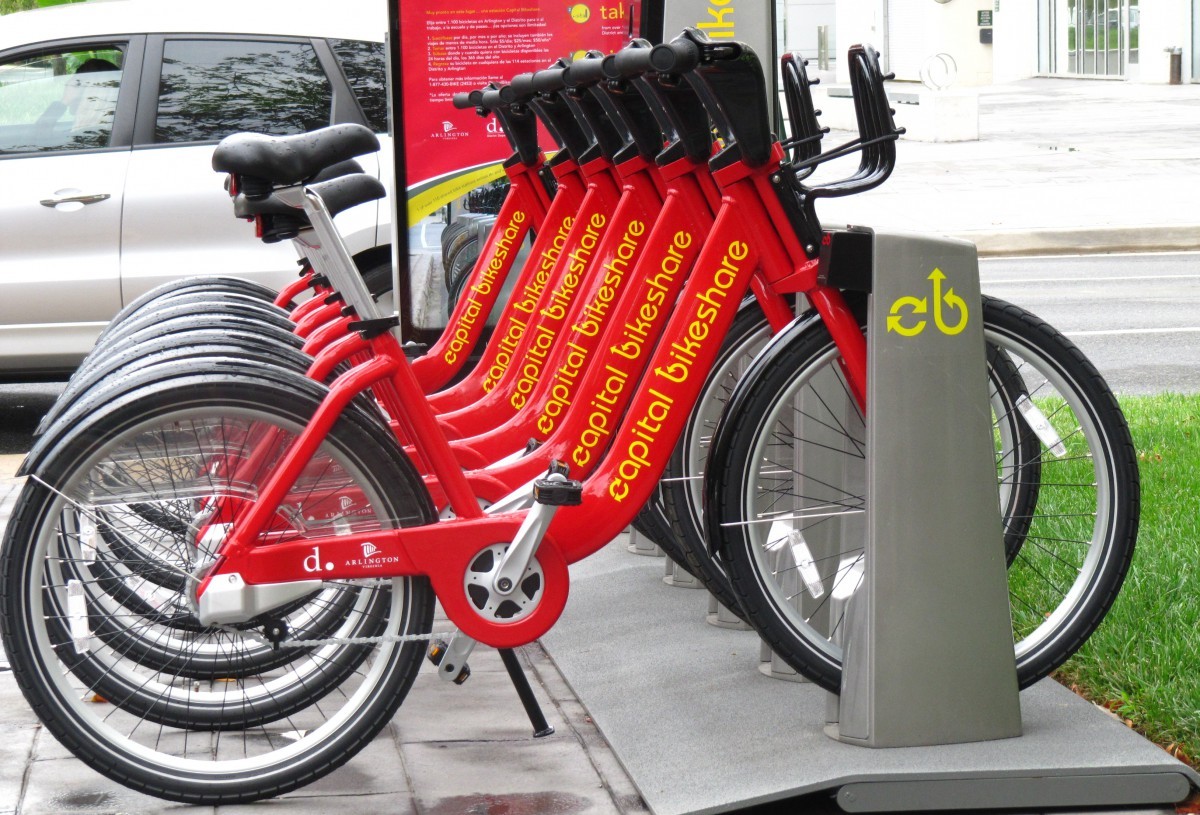
CaBi tops 1.5 million rides: Capital Bikeshare has provided 1.5 million trips since its start less than a year and a half ago. Its success has made CaBi a model for the rest of the country. (TBD)
Metro admits blame: Metro and three equipment manufacturers will admit liability for the first time publicly for the Fort Totten crash. The admission allows WMATA to avoid costly courtroom litigation. (Examiner)
Bill encourages complete streets: The Prince George's County Council will vote today on a bill to have developments contribute to pedestrian and biking facilities and not just road capacity for cars. (WashCycle)
More seats for NoVa on transpo board: A bill that just passed the Virginia House would allocate more seats to Northern Virginia on the Commonwealth Transportation Board, giving the area more control over transportation dollars. (Examiner)
Old is the new green: While new LEED-certified buildings are great, using existing buildings can be even greener. Numerous buildings in the area have undergone retrofits in recent years and another one is about to start, converting two old EPA buildings in Southwest into residential. (City Paper, SWTLQTC)
One way around a height limit: Architects have designed a zero-foot tall, 65-story "earth-scraper" for Mexico City. The underground building would allow lots of density without violating the city's 8-story height limit. (Daily Mail)
And...: The DC area ranks third in transit use, behind New York and San Fransisco. (WBJ) ... President Obama cuts school voucher funding for DC. (DCist) ... The DC area is the second hottest condo market in the country. (Redfin)
Have a tip for the links? Submit it here.
Comments
Cyclists are special and do have their own rules
- Cyclists are special and do have their own rules
- M Street cycle track keeps improving, draws church anger
- O'Malley announces first projects using new gas tax money
- ICC losing bus service in classic bait and switch
- Judge denies injunction against closing schools
- Can Loudoun grow while protecting its rural areas?
- Silver Spring mall could get massive facelift, new name
Tue May 21
Sun May 26
11:00 am Roosevelt Ride in Greenbelt
Sat Jun 1
10:00 am CSG walking tour of Wheaton


Funny, I thought the increased cost of insurance was something that was hurting WMATA's budget.
by charlie on Feb 15, 2012 8:50 am • link • report
WOW! too bad we've already leased the old covention center site ... Something like this would have allowed to both have a central park for the District AND satisfy the Council's longing to monetize every square foot of developable land in the city center.
by Lance on Feb 15, 2012 9:09 am • link • report
by selxic on Feb 15, 2012 9:20 am • link • report
by joz on Feb 15, 2012 9:29 am • link • report
by selxic on Feb 15, 2012 9:32 am • link • report
by canaan on Feb 15, 2012 9:45 am • link • report
Too add. Most sewage and drainage systems are gravity driven. It is going to be one hell of a sump pump to get the waste out of that building. I suspect if you take that architectural design to an engineering firm you will be laughed out of the building.
by RJ on Feb 15, 2012 9:58 am • link • report
I actualyl think cities with lots of poor people who can't afford cars CaBi would be quite succesful. A bus ticket in most cities is at least 1.50 each way. As long as you stay under the 30 minute threashhold CaBi is a lot cheaper then that.
Though your needless addition of the words bureaucratic and hand out show that you are not likely interested ina real discussion.
by nathaniel on Feb 15, 2012 10:06 am • link • report
Then I got to this gem:
"Not included are what I imagine to be rather substantial marketing and management costs."
Seriously, what in the world is the point of trying to perpetuate fiscal success when you purposely leave out what are probably the two most significant costs to the program? What a joke.
Also, their trip stats are suspect. Their use has supposedly accelerated since summer, rather than fall off which is what happens when the weather turns cold. Last winters cabi ridership fell off 40% during the winter months. Granted, this winter hasn't been "brutal", but neither was last years. Seems unlikely that cabi would increase ridership when the weather turns cold.
by freely on Feb 15, 2012 10:23 am • link • report
But, with that said, how many people does Metro transport on the average day? I think it is around 800-900K. How many people drive into the city every day? (I have no clue but I bet it rivals or is greater than Metro #s)
CaBi moving 1.5M people over the course of about 18 months is a huge milestone for CaBi but a small milestone in our transportation network.
Something interesting to look into would be the growth/adoption of different transit methods over time and compare CaBi's growth to them. How quickly did the auto become adopted? How quickly did Metro's ridership #s grow? How about the trolleys?
I hope the next 1.5M comes in a far shorter timeframe for CaBi; I'd love to see exponential growth.
by CaBi Lover on Feb 15, 2012 10:28 am • link • report
by selxic on Feb 15, 2012 10:37 am • link • report
by Lance on Feb 15, 2012 10:43 am • link • report
Last winters cabi ridership fell off 40% during the winter months. Granted, this winter hasn't been "brutal", but neither was last years. Seems unlikely that cabi would increase ridership when the weather turns cold.
Um, last winter the system was brand new. Ridership didn't fall off last winter at all because there was nothing to fall off from - there was no baseline. That ridership is higher this winter is merely a sign of a system that's been around for a year.
by Alex B. on Feb 15, 2012 10:45 am • link • report
One day, I'm sure there will be an example of a bikeshare city or expansion that didn't work (it's NOT going to be the 10,000 bike system in NYC that's about to start -- that I'm sure of). At that point, the bikeshare detractors will have at least one data point on their side. Until then, they're grasping at straws.
by Falls Church on Feb 15, 2012 10:45 am • link • report
Once the Rosslyn-Ballston corridor expansion is completed, and it reaches beyond just Wilson and Clarendon Blvds, I would expect to see an even more significant ridership increase.
by Jacques on Feb 15, 2012 10:50 am • link • report
Yes it did...its day to day and month to month numbers fell of precipitiously (minimum of 40%) from the warm fall months to the winter months. Bike share usage is highly weather dependant.
http://thecityfix.com/blog/bye-bye-bikeshare-see-you-next-spring/
I am just saying, that cabi obviously doesn't have any problem "finesing" their numbers (see fiscal performance above), reading between the lines is probably in order.
by freely on Feb 15, 2012 11:01 am • link • report
by H Street Landlord on Feb 15, 2012 11:07 am • link • report
Don't be obtuse.
Obviously, you'd expect higher ridership in the summer than the winter. But that's not the point.
There's no finessing of the numbers. You can see them for yourself:
http://cabidashboard.ddot.dc.gov/CaBiDashboard/
Go to ridership, select 'all available data.' December 2010 trips: 28,800. December 2011 trips: 87,300.
The point is that ridership has increased because the system has expanded. The data does not support the claim you are trying to make. Yes, ridership decreases during the winter (compared to summer highs) but that doesn't mean it can't increase in absolute terms (because the system is expanding).
In short, I don't know what your point is. What's 'unlikely' about this data?
by Alex B. on Feb 15, 2012 11:12 am • link • report
by H Street Landlord on Feb 15, 2012 11:14 am • link • report
January and Feb are missing.
I understand the system has expanded in real terms but ridership has been dropping off significantly (31% per month) since its year anniversary, it has declined 12% since a 20% increase in the number of bikes in the system. Ridership was at 87K in December for a total of 1,310,326 trips. For them to have reached 1.5 million already, and add the remaining 190K trips in the past 6 weeksJanuary and Februarys numbers would have had to grown a minimum of 15%, and considering the weather in January and February has been colder than Decembers, I am taking their number skeptically.
CABI has been "streeeetch" the truth since day one. What it costs to operate, proposed operational "break even numbers" and date, current fiscal performance (see above).
There is nothing wrong with treating their current "claims" with doubt.
by freely on Feb 15, 2012 11:54 am • link • report
Not sure where you got the idea that ridership has "accelerated" since the summer but that's not true. ~140,000 trips in each of June, July, and August. 87,000 in December.
It took 8+ months to reach the first 500K trips (June 1), a little less than 4 to reach the second 500K (Sept 20), and around 5 for the 3rd 500K (~Feb 13).
by MLD on Feb 15, 2012 12:07 pm • link • report
Hm, critics keep saying that either bike sharing only works for poor people in China (where the largest systems are) or for rich people in DC, Denver, Boston, and Minneapolis (all among the wealthiest cities in the country) or Mexico City (where it's only in some rich neighborhoods). Or... maybe... get this... it works for everyone, rich and poor! Wow.
I don't see the economic feasibility of digging quite that far underneath the Zócalo, particularly given the muddy and unstable dirt underneath. However, I would be curious to see just how far underground sunlight could penetrate using a similar design.
by Payton on Feb 15, 2012 12:17 pm • link • report
Jan and Feb are not 'missing,' they just haven't been added yet. Not sure how you'd expect to add month-long data for February when we're only halfway through the month. It's a reporting tool, not a real-time update.
and add the remaining 190K trips in the past 6 weeksJanuary and Februarys numbers would have had to grown a minimum of 15%, and considering the weather in January and February has been colder than Decembers, I am taking their number skeptically.
Why? The 2010 data showed increases in usage from a December low, with both January and February 2011 posting increases more on the order of 30%. Given that context, why would a minimum of 15% be out of line?
There is nothing wrong with treating their current "claims" with doubt.
By all means, please do. All I ask is that you use some actual math and data. You haven't presented anything here that's remotely fishy.
If you want to talk about opaque finance data, fine. But the ridership numbers are right there, in plain sight.
by Alex B. on Feb 15, 2012 12:18 pm • link • report
by Arl Fan on Feb 15, 2012 12:47 pm • link • report
I forget how much my inital membership was ($50?) then the LS deal to renew (37?). That is 87 for two year, or about 43 a year.
Right now membership renweal is 75. Not sure you can push it up more. At 75 it is going to be tough to renew. Not sure I've gotten $75 in one year (maybe about 200 trips in a year in a half?)
I'd rather see a multiyear member (outside of LS); say $100 (or $125) for two year. If you broke it in monthly billings, you could do $25 a month for half a year.
by charlie on Feb 15, 2012 12:59 pm • link • report
by H Street Landlord on Feb 15, 2012 1:02 pm • link • report
This winter, however, has been very mild and I have been taking a lot of CaBi trips.
by Max on Feb 15, 2012 1:15 pm • link • report
I guess it's all a matter of how you look at it. I'd rather take bikeshare to go from Lincoln Park to Union Station than walk in 90-100 degree heat. Or wait 20 min for a bus for that matter. At least you get a breeze.
by oboe on Feb 15, 2012 1:43 pm • link • report
by Ms. D on Feb 15, 2012 2:57 pm • link • report
by Ms. D on Feb 15, 2012 3:09 pm • link • report
You won't be charged the fee if you switch bikes partway through your trip! I think a lot of annual members do this on longer trips.
by MLD on Feb 15, 2012 3:19 pm • link • report
by JustMe on Feb 15, 2012 4:09 pm • link • report
The data is here: http://jdantos.wordpress.com/2012/01/18/capital-bikeshare-data-part-2/
Personally, I've used bikeshare almost 250 times since 0ctober 2010, and I've incurred about $20 in total usage fees (half of that when I did the 20-mile BikeDC ride using only CaBi bikes). My usage has included trips that encompassed places including Nationals Park, Georgetown, Downtown, Capitol Hill, Rosslyn/Courthouse and more, and the rides longer than 4-5 miles usually included at least one bike switch, which was not remotely inconvenient.
I wouldn't be personally opposed to some type of tiered-usage pricing scheme (a 25 to 50-cent per ride surcharge for rides in excess of 10 per week, perhaps?), but I do think it would mess with the simplicity of the pricing, and the appeal.
by Jacques on Feb 15, 2012 4:11 pm • link • report
http://www.huntmidwest.com/subtropolis/index.html
by dcdriver on Feb 15, 2012 4:29 pm • link • report
Every model like this is going to have "free-rider" problems, where someone figures out how to pay less/get more service than others. If the "free-rider" issue is substantial (which CaBi's data should be able to easily tell us...how many people get off a bike and then pick up another one within a minute or two? shouldn't be hard to figure out), then something needs to be done to address it. Your proposed issue could easily be mitigated by instituting a few minute "time-out" between rentals to frustrate those stringing together short trips into longer ones. Will some people still do it? Yes, there are some sorry people out there who will do anything to save a buck. Will *less* people do it? Yes. Programming change, rather than charging honest users more, mitigates this particular free-rider problem.
Again, I'm not opposed to examining the pricing structure, just pointing out 2 things. (1) A "next-lowest-cost" comparison for the pricing structure, as proposed by Arl, not only reveals a pretty low comparison point, but is not entirely appropriate. Car and transit travel is far more luxurious than bike travel, and we should consider that when pricing bike share rather than just looking at dollars and cents out of pocket. Outside of making sure we don't *exceed* the next-lowest-cost mode, I'd say it's a wholly inappropriate model for bike share pricing. (2) We shouldn't punish the class for the poor behavior of a few, and I speculate that we have a lot of casual users of bike share who would be turned off by a *substantial* fee increase to help cover the costs from regular users/abusers of the system. Not that we can't/shouldn't raise prices for some/at all. Price increases may be justified for some/all users, but there are various ways to do this without decreasing the use of the system. First we need to know the median behavior of a bike share user and what the distribution looks like, then we can decide how to best change prices. Just encouraging some careful thought rather than yelling "rawr CaBi should be self-sustaining my tax dollars for fancy bikes you're stealing from the system hurp a durp." We haven't gotten to that level of discourse, but I'd like to contribute something that people can really chew on rather than simplistic too much/not enough analysis.
by Ms. D on Feb 15, 2012 4:54 pm • link • report
by Ms. D on Feb 15, 2012 4:55 pm • link • report
by Ms. D on Feb 15, 2012 5:05 pm • link • report
CaBi usage is very "sticky," and once people have tried it, they're unlikely to switch away. I agree that cheap memberships and unlimited pricing are important to get people to try the service. But in a world of stiff competition for government transportation dollars, CaBi will be a much better model if there is a plan in place to diminish the level of subsidies once the system is established.
@charlie: Absolutely -- the details are important and any pricing changes should be thoughtful. I doubt $75 is very far off from the optimum annual membership price and I don't think it's worth changing.
Several models are possible. The "simplicity is king" path might be a simple, $.10 charge per rental. Hardly enough to deter anyone from riding, easy to understand, and worth some real dollars when ridership gets high enough.
Alternatively a "heavy user surcharge" might look like a flat, per-trip fee of $.25 or $.50 on <30 minute trips, but with the first 200 trips (of 30 minutes or less) free with the annual membership. "200 trips free with membership" is easy to understand, and most people riding more than 200 trips per year are probably invested enough/savvy enough to see that it's still a great deal.
And the "Pay Extra to Trade" might be to impose a $.50 fee each time an annual user connects 2 trips of 1 mile or more within, say, 5 minutes. (Logic: not penalizing <1 mile rides which are likely either 1) walking substitutes, or 2) "trade-ins" on an uncomfortable/squeaky/wounded bike; having the charge be cheap enough that people won't be too incentivized to game the system -- or stand around twiddling their thumbs -- to avoid it; not penalize quick round-trips for a single errand).
by Arl Fan on Feb 15, 2012 5:24 pm • link • report
by h street landlord on Feb 15, 2012 5:30 pm • link • report
Why is that challenge any greater than ensuring a 600 foot tall building has adequate water pressure on the top floors?
Big containment tank at the bottom, allowing gravity for everything else, with a pump to take it up--and multiple backup generators to power it.
by ah on Feb 15, 2012 5:58 pm • link • report
The sewage in a hole problem is harder. More prone to clog, you're fighting gravity constantly, and the worst case is that your building fills with poo. Pumping a semi-solid mess up 65 stories is harder than pumping plain water. Even if nobody is using water you're probably filling your holding tank continuously with groundwater seepage. (Probably a separate tank, but same problem.)
by Mike on Feb 15, 2012 7:01 pm • link • report
As I mentioned, my average of 2 round-trips a week run a little under $.50/leg (I round up fairly generously as I don't track my usage, but I do go on vacation and work trips and don't ride as much in the winter, and only *regularly* use it for 2 specific round-trips most weeks), so $.10 is probably too low. 200 free rides sounds good enough to consider, but I'd probably say 400 since that's 2 round-trips most weeks, which seems pretty typical of me & my friends. A transfer fee might work, as might my suggestion of having a "time out" for transfers, perhaps coupled with a mid-tier for people who aren't *sure* they'll make their destination in 30 minutes so as not to discourage use (15 extra minutes for $.50 or something). I don't think most people have trouble understanding Zipcar's 2 membership options, or those pesky new data limits on smartphones, so my 2-tier system idea might also work. All good ideas, and easy enough to explore by sorting some existing data and maybe conducting a few surveys. It's hard to pin down an optimum membership fee right now (on a cost, not substitution, basis), however, given the newness of the system and the continued expansion. Sure, we can amortize the costs of stations and bikes over their expected life-span, but a few more years of data would be nice to make sure the expected costs are fairly accurate before putting our foot down and saying fees *must* match cost targets. One should also consider that with more stations and longevity, advertising costs will decline (I advertised CaBi for free when I rented my apartment, and as it becomes a known good, more of that kind of word-of-mouth will take hold). Smart business people would have no trouble making these types of calculations and culling the proper data in the right ways.
I certainly think it can be a self-sustaining system in the long-run with a few tweaks, so I'm not arguing it should continue to be subsidized with transportation funds indefinitely. But I've also convinced many the reluctant person that it's a good deal that will improve their life. It took me a good long time to sign up, even.
I won't belabor my point about what the proper substitution-based pricing would be (the trips I substitute for are a long walk and a car trip w/free parking...not sure if I'd pay for parking...I'd be carpooling so the cost would be pretty low per passenger - my neighbors shop at the same store, but CaBi gives me the freedom to go when it's convenient for me - but could also Metro). Long story short, I prefer a cost-based fee system. It doesn't need to be profitable, it's ultimately a form of semi-privatized public transportation, and break-even is good enough.
by Ms. D on Feb 15, 2012 8:21 pm • link • report
by Ms. D on Feb 15, 2012 8:43 pm • link • report
"what in the world is the point of trying to perpetuate fiscal success when you purposely leave out what are probably the two most significant costs to the program?"
marketing and management are not the two most significant costs, and the marketing costs will go down over time. In the beginning a lot of marketing is needed.
" their trip stats are suspect. "
No they aren't. Are you accusing CaBi of fraud? That's a pretty serious charge. You better have more to back that up then false evidence.
by David C on Feb 15, 2012 9:42 pm • link • report
by Falls Church on Feb 15, 2012 10:11 pm • link • report
by David C on Feb 15, 2012 10:44 pm • link • report
by Canaan on Feb 15, 2012 11:07 pm • link • report
Total trips at the end of December were 1,361,074.
Trips in January were 96,950.
41,976 trips in the first half of February brought the total to 1.5 million.
Chris Eatough, BikeArlington Program Manager.
by Chris Eatough on Feb 16, 2012 7:51 am • link • report
by Ms. D on Feb 17, 2012 1:51 am • link • report
Add a Comment