Links
Breakfast links: Raise the roof
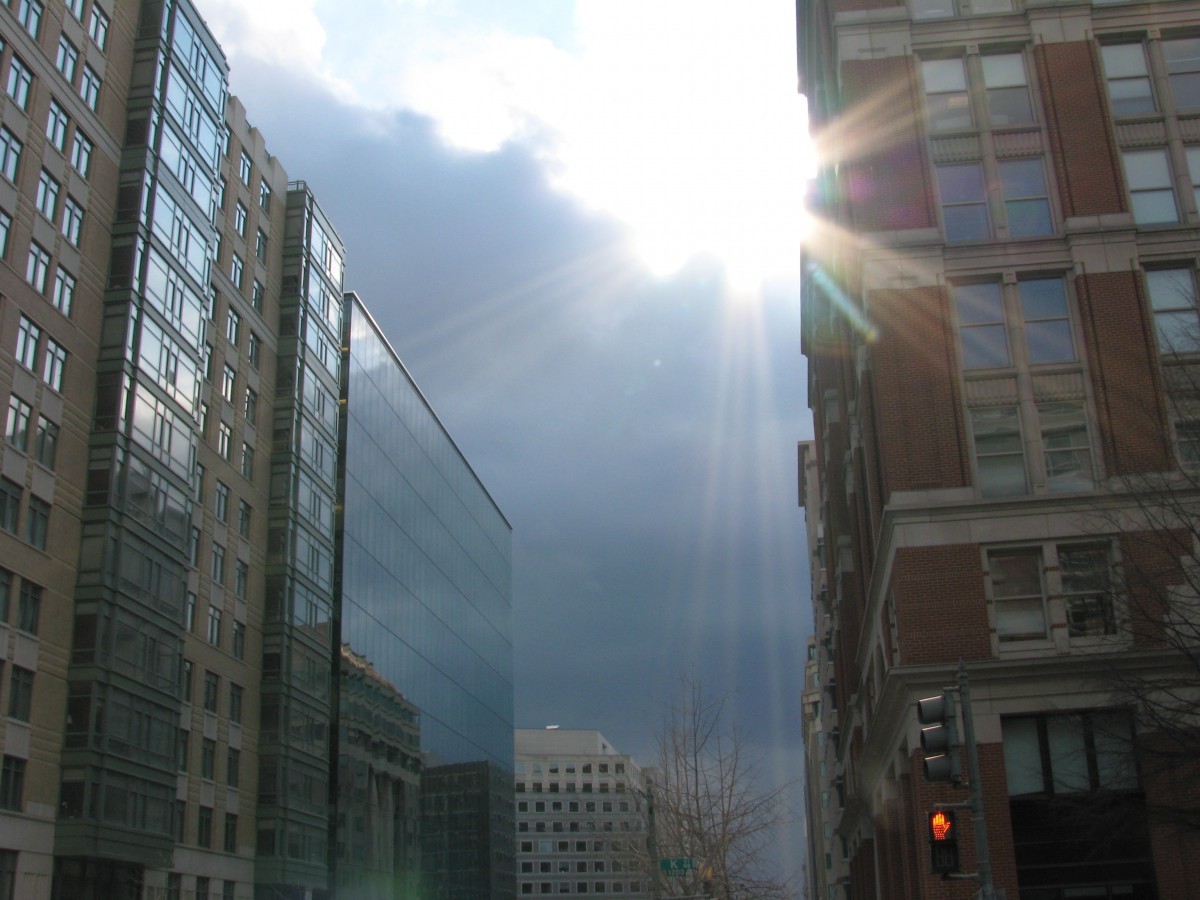
Raise the height limit?: Congressman Darrell Issa is talking to Mayor Gray about raising DC's height limit. The current proposal would just let currently-allowed mechanical penthouses hold livable space, not actually make taller buildings. (Post)
Wish list would restore cuts, maybe: Mayor Gray released a "wish list" of $120 million in programs he'd like to fund if more money becomes available. Most restore recent cuts to programs for the poor like affordable housing and TANF. (DCFPI)
Metro no, rural roads yes: While Governor McDonnell is cutting $300 million in state funding for the Silver Line, at the same time far less worthy road projects in rural Virginia will get close to $1 billion. (Post)
Innovation gets grants: DCPS wants to help its schools experiment, such as lengthening the school day or providing special services to a group that needs it. It's offering $10 million in grants to make it happen. (Examiner)
Forest Glen zoned for failure: A large plot of vacant land near Forest Glen Metro will get a few single-family houses. Why nothing larger? The zoning only allows single-family homes, even though there's a Metro station right there. (The Orbital)
Easy as 3-1-1: A new app for iPhone and Android lets you report 311 maintenance requests, and also see requests that have come from neighbors. (DCist)
Back to the land in the city: No city is a stranger to vacant lots, but no city knows vacancy as well as Detroit. To combat the problem, citizens are planting gardens and taking over neighboring lots, largely without the city's approval. (Free Press)
And...: Shaw's Tavern has a liquor license at last. (DCist) ... DC's arts commission weirds up the town with a stainless steel... box? (Post) ... Prince William County gets away from federal oversight of its voting practices. (Washington Times)
Have a tip for the links? Submit it here.
Comments
Latest Metro map drafts add Anacostia parks and other tweaks
- Latest Metro map drafts add Anacostia parks and other tweaks
- Bikeshare is a gateway to private biking, not competition
- Short-term Washingtonians deserve a voice, too
- DC Council makes major policy changes overnight
- Public land deals have both benefits and pitfalls
- Parklets give every block a little park
- Judge denies injunction against closing schools
Sun May 26
11:00 am Roosevelt Ride in Greenbelt
Sat Jun 1
10:00 am CSG walking tour of Wheaton
Tue Jun 4
6:30 pm Height limit meeting at NCPC
Thu Jun 6


A democrat (granted, a stogy old democrat who is only being persudaded from retirement to keep the Republicans from controlling the chamber completely) stopped the money going to Dulles.
The Governor's proposal to spend money in the rest of the state, well, Virignia is bigger than Northern Virginia. Amazing, I know. Does Charlottsville need a bypass -- well, they need something because sprawl is going to destroy it Another toll road from the port makes a certain amount of sense.
by charlie on Apr 12, 2012 8:52 am • link • report
As it is, useful for reporting, but doesn't seem to effectively leverage its full potential.
by ah on Apr 12, 2012 9:01 am • link • report
"If you raise the limits . . . what you would see is buildings getting just a little thinner as they go up, Baranes said. You would get a little bit more light and a little bit more space between them."
If buildings can be built one floor taller, they are likely to be the same boxes we see today, only one floor taller. The economic incentives to maximize density will remain.
For this statement to be true, the rules would have to be modified so that one could build a building with the same volume on the space, but with relaxed height limits -- e.g., if you take volume off of floors 11-12, you can use it to build floors 13-14.
by ah on Apr 12, 2012 9:06 am • link • report
by selxic on Apr 12, 2012 9:07 am • link • report
Well, that makes sense. Nobody would expect a bypass to increase sprawl, certainly.
by Gray on Apr 12, 2012 9:09 am • link • report
by Canaan on Apr 12, 2012 9:09 am • link • report
by cminus on Apr 12, 2012 9:19 am • link • report
That's not quite true, but you are right that it's not as simple as relaxing height restrictions and assuming that builders won't build more big blocks. Luckily, though, we have plenty of examples of how to do this from other cities that have actually put some time into building codes for tall buildings.
by Gray on Apr 12, 2012 9:19 am • link • report
by Sam on Apr 12, 2012 9:21 am • link • report
And I wouldn't say Charlotsville is "rural" Virginia. Albermerle County, maybe. Rt 29 is a mess, and I don't think the area is big enough to support real transit. And as we all know here, you can't have density without transit.
My major point is this isn't a "McDonnel scews Northern Virginia". PW county scewed Northern Virginia.
by charlie on Apr 12, 2012 9:28 am • link • report
And most Virginians don't live on the Silver Line. McDonnell would look like a fool to his voters if he spent $300 million on transit for one county and only $1 billion on the needs of the other 94.
by Ronald on Apr 12, 2012 9:31 am • link • report
by mcs on Apr 12, 2012 9:35 am • link • report
by Thayer-D on Apr 12, 2012 9:38 am • link • report
I think it makes sense to spend $300 million on transit for northern VA, since 21% of the states total population lives in the area served by metro (2010 Census: Fairfax (1.081mm), Loudon (312,311), Arlington (207,627), Alexandria (139,966), and Falls Church (12,322))
by Bob on Apr 12, 2012 9:42 am • link • report
The question is whether the state will commit an additional $300 million above and beyond what had previously been agreed upon.
It has been just three weeks since Senators Howell and Herring trumpeted their success in getting their budget amendment to add the $300 million through the Senate:
(Sen. Herring blog, Mar. 22, 2012).The same news release makes clear that there was not yet any commitment by the House of Delegates or Governor McDonnell to spend the extra $300 million:
The partisan spin that this is a "cut" does not help attract new supporters from the ranks of Republicans of independents and would better be avoided, in my opinion.by Arl Fan on Apr 12, 2012 9:44 am • link • report
by jkc on Apr 12, 2012 9:44 am • link • report
by Arl Fan on Apr 12, 2012 9:46 am • link • report
by Gray on Apr 12, 2012 9:46 am • link • report
How do we know these projects are less worthy? Once could also comment that between what the state is spending on the silver line the current and past beltway improvements (HOT lanes, WW Bridge, 95 interchange, etc) the rural communities might be due for more funding. Also while 1 billion seems like a lot, spread out over all the rural areas it is not that much.
Also the argument that several have made about choosing projects that will impact the most people is not completely fair. Using that logic the state would only spend money on Northern VA leaving rural VA with nothing.
by Matt R on Apr 12, 2012 9:57 am • link • report
This is an argument for the Federal Government to pay for the Metro expansion, not Virginia.
by goldfish on Apr 12, 2012 10:03 am • link • report
by goldfish on Apr 12, 2012 10:19 am • link • report
/from someone who grew up in rural Va.
by Canaan on Apr 12, 2012 10:20 am • link • report
I guess Canada is not part of the advanced industrialized world. Then again, Ottawa is not an international destination.
by RJ on Apr 12, 2012 10:26 am • link • report
[Deleted for violating the comment policy.] The issue with funding isn't a rail link to Dulles, which will happen. It is about extending it out further, which is a very questionable move.
by charlie on Apr 12, 2012 10:27 am • link • report
(I kid, I kid...I love Canada. Except for Harry Somers...y'all can keep him.)
@Matt R: Well put. Count me as another one who gets a little irritated at the pitched battles that people seem to want between NoVA and the rest of the state. There's a whole bunch of other counties out there, and they have just as much right to a say in how the commonwealth is run as we do up here. And I say that as a near-lifelong Fairfax County resident with roots elsewhere in the state.
by Ser Amantio di Nicolao on Apr 12, 2012 10:30 am • link • report
Not true. If it was up to Colgan he would have kept the $300M for the Silver Line in there. The problem was that it simply wasn't going to happen and Colgan, as a pragmatist, realized that losing the $300M was better than a government shutdown. The real person screwing NOVA:
State budget negotiators stripped $300 million in Metrorail funding from their spending plan this week after Gov. Robert F. McDonnells transportation chief made it clear that the governor would not agree to the extra money.
http://www.washingtonpost.com/blogs/virginia-politics/post/mcdonnell-offered-millions-for-metro-but-offer-disappeared-senator-says/2012/04/06/gIQAqL1Q0S_blog.html
by Falls Church on Apr 12, 2012 10:46 am • link • report
A. there is some debate from State Sen Howell about what the admin had agreed to commit
B. 150 million is arguably a small contribution for a project this size, which will make the region more competitive resulting in additional tax revenues in Richmond
What are the local contribs to the mentioned road projects
C the list of beltway improvements is silly. The hot lanes are being financed out of tolls, and the wilson bridge was to replace a facility that had reached the end of its useful structural life
C.
by AWalkerInTheCity on Apr 12, 2012 10:47 am • link • report
Again, you can frame this as a tribal Northern Virginia against the rest of the state, or you can frame it as McDonnel having serious reservations about MWAA and their ability to to phase II.
As was discussed a few days ago, $12 tolls on the DTR is not a great package either. We need some compromises. MWAA needs to kick in some money from a passenger fee. MWAA probably won't get the extra bidding incentives for unions. And the Commonwealth will have to kick in some money too.
by charlie on Apr 12, 2012 11:01 am • link • report
NOVA has been continually screwed in favor of ROVA (Rest Of Virginia) for over 20 years. ROVA gets 80% of our taxes which they use to subsidize their rural "lifestyles" - ever driven 295 in Richmond? Or 199 in Williamsburg? How could the state find the funding to build multiple highways to nowhere, but not the money to widen Route 7 in Fairfax County or convert Baron Cameron & Route 7 to an interchange, for example? This isn't just about Metro, people. This is about Langley High School having asbestos until the late 1990s/early 2000s while Madison County has shiny, brand-new facilities.
Income redistribution is apparently only a bad thing to the GOP when you're the one getting fleeced.
by Matthew B on Apr 12, 2012 11:07 am • link • report
No, they are less worthy because per dollar invested, they return fewer jobs created, fewer income taxes generated, and less property value increased. Find me a project in rural VA that has the same kind of cost/benefit as the Silver Line and I'd gladly support it.
Once could also comment that between what the state is spending on the silver line the current and past beltway improvements (HOT lanes, WW Bridge, 95 interchange, etc) the rural communities might be due for more funding.
The state is providing less than 5% of the funding for the Silver Line and a minority of the money for the HOT lanes. I would be more likely to support the rural projects if local citizens were paying the majority of the cost for their projects as Northern Virginians do.
by Falls Church on Apr 12, 2012 11:31 am • link • report
Actually the rail link to Dulles is the station that's less important than the others. The business case for the Silver Line is based on creating 100K jobs in Tysons (and some in Reston) and increasing property values by $10B in Tysons (plus in other places along the line). Extending rail to Loudoun is necessary to realize those projections because they are based on Loudoun residents commuting to Tysons. The airport link doesn't really impact the numbers all that much.
by Falls Church on Apr 12, 2012 11:36 am • link • report
Politics does not work that way, thankfully, which also weighs the connectivity that is essential in commerce. Urban dwellers, for example, rely on goods and services delivered from the hinterlands.
by goldfish on Apr 12, 2012 11:44 am • link • report
That being said, I kinda like the idea of raising the limit in areas well away from the CBD.
by Juanita de Talmas on Apr 12, 2012 12:03 pm • link • report
by Canaan on Apr 12, 2012 12:07 pm • link • report
----
I'm not sure how this argument can be made, considering the Silver Line to Dulles is currently under construction and MWAA has taken a "we're building it come hell or high water" approach to funding.
MWAA has explicity stated "we don't need Virginia's money" to build the Phase I portion to Dulles. It's already being funded on the backs of Toll Road users and if MWAA finds itself running short it will simply raise the tolls.
The argument here is whether Phase II into Loudon County will be funded - or even built. Fact is many in Loudon County, including some members of the Loudon County Council, don't want to spend the money.
I honestly don't think this is even an issue and find it somewhat funny that when local areas don't want to build or expand roads, we hear bloggers talking about the need for the Commonwealth to respect the positions of the locals - as was the case with Arlington's resistance to HOT lanes on I-395 and opposition to widening I-66. But when it comes to building rail, then these many of these same folks want the state to step up and "take responsibility".
by ceefer66 on Apr 12, 2012 12:08 pm • link • report
Phase I does not go to Dulles. Phase II does.
by MLD on Apr 12, 2012 12:13 pm • link • report
Allow for projected population growth? The city is still 200,000 people below what it was at its peak.
This is largely irrelevant, since the average family size in 1950 was substantially larger than it is today. This is true of the nation in general, but it is especially true in DC. This assertion does not somehow mean that DC needs less space.
More important than any historical population comparison is a simple comparison of prices, showing very strong demand and limited supply.
by Alex B. on Apr 12, 2012 12:20 pm • link • report
No such project exists or will ever exist. On the other hand rural areas do deserve improvements to their roads.
by Matt R on Apr 12, 2012 12:22 pm • link • report
by Vik on Apr 12, 2012 12:38 pm • link • report
1) Eliminate the maximum cap and base height entirely on the width of the right-of-way
2) Eliminate the height differences between residential and commercial development
The first one would allow for taller buildings on the widest streets, using building front to building front rather than curb to curb. The second would allow for much larger residential development in principally residential areas.
by OctaviusIII on Apr 12, 2012 12:43 pm • link • report
That's also an area where a heck of lot of Northern Virginians go to college.
by Kolohe on Apr 12, 2012 12:59 pm • link • report
Yes, but a majority of the Council and residents do want the Silver Line. Loudoun's only hang up is whether MWAA will provide incentives to use union labor. Loudoun opposes those incentives and if they are removed, Loudoun will spend the money to build their stations.
On this point, Loudoun is totally in the right and MWAA needs to drop the union incentives.
by Falls Church on Apr 12, 2012 12:59 pm • link • report
by Kolohe on Apr 12, 2012 1:00 pm • link • report
You'll never find rural development that gets as much bang for the buck as urban development. That's why rural development has always required - and had - a subsidy since the days of the REA (and really, since the days of the National Road).
by Kolohe on Apr 12, 2012 1:04 pm • link • report
You think a county is totally in the right to hold up and even potentially kill the most important construction project that will likely ever happen in the county, that even you admitted most want, over pro/anti-union feelings?
by Kyle W on Apr 12, 2012 1:27 pm • link • report
by alexandrian on Apr 12, 2012 1:35 pm • link • report
I think it's totally wrong for MWAA to hold up and potentially kill the Silver Line over this issue. What MWAA is doing is outside of the norm for government construction projects in VA, so they are the ones that need to change.
Btw, Loudoun isn't asking anyone to be anti-union. They're asking that there be a level playing field where the unions compete based on the same criteria as everyone else.
by Falls Church on Apr 12, 2012 1:44 pm • link • report
Can you point us to a credible link to document that "a majority of Loudon County residents want to see the Silver Line extended beyond Dulles?
The Council majority is in favor, but I honestly haven't seen anything that supports the assertion that the population as a whole wants it.
by ceefer66 on Apr 12, 2012 1:48 pm • link • report
I'm assuming the Council Members represent the views of their constituents. I don't have anything beyond that as I haven't heard of any polls that have been conducted.
by Falls Church on Apr 12, 2012 1:55 pm • link • report
I see.
However, to play devil's advocate, those on the council that are in favor of the Silver Line could very well be motivated by other factors besides the wishes of their constituents - personal feelings, campaign contributions - you name it. I'm not saying that's the case, but proclaiming the "majority" of Loudon residents want the Silver Line extended out into their boondocks simply because the county council voted in favor of it is a bit of a stretch.
And I would dare say that if the council had voted to build a highway to the outer edges of its suburban development, many would accuse them of promoting sprawl - and some would insist they were doing it "against the wishes" of their constituents.
by ceefer66 on Apr 12, 2012 2:36 pm • link • report
by ah on Apr 12, 2012 3:04 pm • link • report
If the 5A were as frequent and reliable as the shuttle bus to Tegel airport, getting to Dulles would be a lot less annoying. But this is WMATA we're talking about, so instead we pay $6.00 for a bus that is frequently late and over capacity. It should run at least twice as often as it does.
by Phil on Apr 12, 2012 7:05 pm • link • report
It isn't about promoting or not promoting sprawl. It's about spending taxpayer dollars wisely by investing in infrastructure and land use planning that is economically sustainable and hopefully profitable. Loudoun's highway based approach has led to a high property tax rate ($1.235 vs $0.978 for Arlington), overcrowded schools, and terrible traffic. Clearly they're doing something wrong...and places like Arlington are doing something right.
by Falls Church on Apr 12, 2012 7:12 pm • link • report
There is no need to do this because the federal height limit is based solely on the width of the fronting street plus something like 20 feet. And note street width is from property line to property line .... Including the front yards of most properties in the older parts of the city since these mainly lie on public space. In most parts if the city the zoning heights are far more restrictive than the federal limit. And in many of the parts where they are the same, other factors prevent building higher. For example my lot is zone for 90 feet, but because I am in a historic district and ajacent to a side alley which would give an addition visibility from the street, were I to want to build a 3rd story, there's no guarantee the board would allow it .... Eveon though I'm currently at less my allowed height under zoning regs. This whole height issue is a red hering in that the only properties that would likely be affected are the already built out properties in the downtown office building area.
by lance on Apr 12, 2012 11:55 pm • link • report
That's what I thought - I'm no height limit expert, but the story and comments made me think otherwise.
There are huge areas beyond the office core that would benefit from raising the height limit: Mount Vernon Square, NoMa, Eckington, Van Ness (in parts), Saint Elizabeth's, Atlas, Fort Totten, Friendship Heights, Waterfront...
by OctaviusIII on Apr 13, 2012 12:10 am • link • report
So if the metro line is built, the adjacent property becomes worth more, and the rate will decrease. But the amount on check may still increase.
by goldfish on Apr 13, 2012 9:30 am • link • report
Those in this blog who deride Mr Colgan would do well to learn a little about him. He's the last World War II veteran in the Virginia legislature. He began as a mechanic for the old Capital Airlines, worked his way up, eventually starting and owning his own airline. He has been in the legislature since the 70's, I believe, and is one of the few members who has always been willing to work across the aisle. He is, from what I hear, still a helluva lot sharper than some of the young know-it-alls who might call him a "stogy old Democrat" in this blog.
I met Colgan back when he worked out a code-sharing agreement with Hap Pareti and the old Presidential Airlines. He was, at that time, an impressive man with a wide knowledge of the airline industry and politics, and a ton of common sense.
[Deleted for violating the comment policy.]
by Mike S.. on Apr 13, 2012 9:50 am • link • report
I'll take rising property values, a decreasing tax rate, and steady "amount on check" any day. As I'm sure would most. If property values outstripped the tax rate decrease, it would still be a great deal.
by Falls Church on Apr 13, 2012 10:11 am • link • report
1. Your points that revolve around property values are arguments for the county governments to pay for the new metro line. The state does not get property taxes.
2. There are many down sides to increase property values: this only helps realtors and those that are cashing out. Increasing property values increase the transaction costs (6% broker's fee, for example); property taxes increase; and for those that need to buy something bigger will find that they can not. Property can get too expensive -- such as it is in DC.
3. If I lived in Loudoun county, I would be asking myself, "what good does the new metro do for me?" And I expect that for most, the answer is very little. It will increase costs and sap money away from road projects, and the line will not actually make getting around to most places any easier.
by goldfish on Apr 13, 2012 10:27 am • link • report
-------------
Considering the fact that the cost of the average home n Loudon is far more affordable than that in Arlington, using the property tax differences between Loudon and Arlington is meaningless.
You're following a familiar path - defining "spending taxpayer dollars wisely", "economically sustainable" and doing something right" as "using resources and doing things I personally approve of" and using a correlation with property values to support your position. [Deleted for violating the comment policy.]
by ceefer66 on Apr 13, 2012 10:39 am • link • report
A. Im not sure the average home in loudoun is that much more affordable if you compare the entire population of homes, which in Arlington is heavily multifamily (including a lot of older multifamily) and in Loudoun includes lots new SFHs on large lots. Apples to apples comparisons are useful for home shoppers - Im not sure they are when comparing jurisdictions that have taken different approaches to how to house their population
B. While some Loudoun folks commute to jobs in Loudoun, arguably the lower prices there are reflective of, and offset, higher transportation costs (and even higher household energy costs due to the inefficiencies of SFH living)
Im not sure the case is open and shut, but the difference in tax rates is at least quite suggestive.
by AWalkerInTheCity on Apr 13, 2012 10:44 am • link • report
I really, really, really doubt that most of the silver line opponents in LC object because they fear their home values will INCREASE. I would suggest that debates over things like crime, school quality, etc suggest most homeowners want their property values to increase.
by AWalkerInTheCity on Apr 13, 2012 10:47 am • link • report
Fair enough. But in addition to the points you make, the large increase in tolls on the DTR, which many see as a proxy for LC, would also give many people doubts about this project.
Since most of the places need to get to in LC are only accessible by driving, and since the new metro line won't change that, what good does it do them?
by goldfish on Apr 13, 2012 10:56 am • link • report
The advantages for Loudoun are A. an alternative way to commute to Tysons (and closer in) which will be of direct value to many Loudoun residents B. Resultant increases in home values, at least in some areas (with resulting increases in tax revenues) C. The possibility to do SOME TOD near the stations with resultant tax revenues D. An extra selling point to employers, esp federal agencies (such as the FBI)
Balanced against the quite real LC piece of the capital and operating costs.
Whether the increased DTR costs should be included in the above equation is debatable. AFAICT MWAA and FFX county are determined to go ahead with the project anyway (is that really just a bluff?) If they do, they will still be upping the tolls to pay for it. Maybe somewhat less, I'm not sure. But the toll increase for Silver Line phase 2 wont go away unless FFX and MWAA drop any extension past Wiele avenue - so it seems unwise for LC citizens to count on their veto of the loudoun stations preventing toll increases.
by AWalkerInTheCity on Apr 13, 2012 11:27 am • link • report
Add a Comment