Links
Breakfast links: Music to your ears
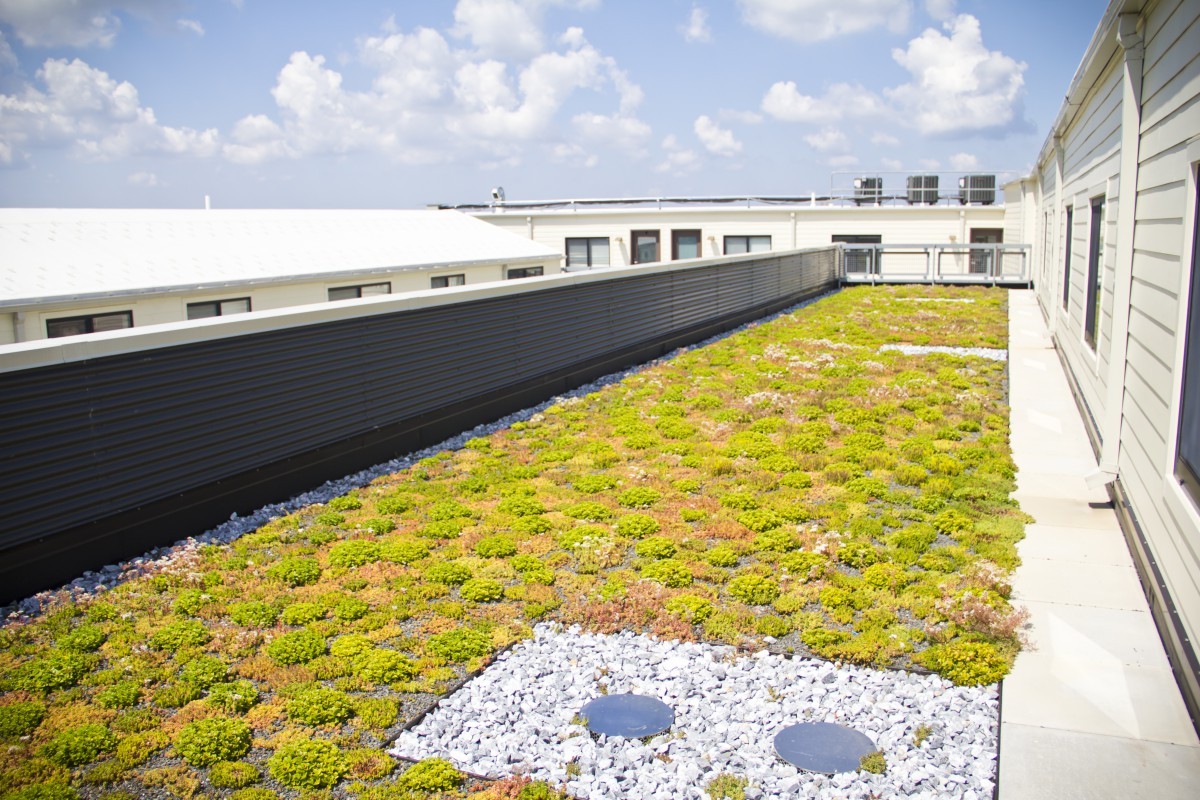
Go green: Mayor Gray's ambitious Sustainability DC plan aims to halve greenhouse emissions with measures like greener buildings and modernized schools and public housing. The plan also includes a pay-as-you-throw plan for trash, where residents would pay by the can or bag. (Post)
Bike safer: A new cycling bill introduced by Councilmembers Wells and Cheh would put questions about bike safety on DC's driver's license test, require safe detours around construction, and increase penalties for drivers who fail to yield to cyclists. (WashCycle)
Don't drive so close to me: A bill that would have made following a cyclist too closely illegal in Virginia was defeated in the House of Delegates, leaving Virginia the lone state without such a law. (FABB)
Telephone line for safety: USDOT is looking to set up an anonymous tip line for Metro employees to report close calls and other safety issues. Officials expect to get 400 calls a year, based on experience with other rail networks. (Examiner)
A blow to Costco gas: The Montgomery County Planning Department has recommended against allowing the Wheaton Costco to build a gas station citing adverse health impacts of idling cars at what would be the busiest gas station in Montgomery County. (Patch)
Imagine there's no Metro: Without Metro, traffic in the region could be much worse. If only 5% of Yellow Line riders switched to driving on the 14th Street bridge, the queue to cross the river could be 10 miles long. (PlanItMetro)
One day more: Bidding for Georgetown's West Heating Plant was extended by a day with bidding activity picking up greatly between 4 bidders, placing the price of the site at at least $5.2 million. (Urban Turf)
Life in the fast lane: The opening of the new Beltway HOT lanes means commuter buses to Tysons are getting through their routes 20 minutes faster, forcing the operators to update their schedules. (Potomac Local News)
Have a tip for the links? Submit it here.
Comments
Metro bag searches aren't always optional
- Metro bag searches aren't always optional
- Young kids try to assault me while biking
- Redeveloping McMillan is the only way to save it
- Endless zoning update delay hurts homeowners
- Vienna Metro town center won't have a town center
- DDOT agrees to repave 15th Street cycle track
- Residents organize for positive change in Bluemont


by michael on Feb 20, 2013 8:17 am • link • report
They were a minimum of 50% off in the number of cars metro supposedly removes from the road. They based their entire assumption on the fact that average auto occupancy was 1.1 passengers per vehicle. US DOT quanitifed in 2009, that the average car occupancy was 1.59, nearly 50% off Metro's assumption. This was the lowest of course, vans were 2.35 and SUV's were 1.92. I just reduced that so called 10 mile long que by 3 miles.
This is during peak rush hour, when I would anecdotally assume that vehicle occupancy on 395 is higher than average.
All in all, a pretty transparent and weakly based argument by Metro. Then again, with their track record, I am not suprised.
by Erg... on Feb 20, 2013 8:31 am • link • report
1.1 passengers per vehicle is the average during peak commute times. You may be right though that 395 has higher vehicle occupancy than that, but they were using the correct number from USDOT for the time period they were comparing to. Maybe MWCOG has some data on 395 vehicle occupancy.
by MLD on Feb 20, 2013 8:47 am • link • report
by TMT on Feb 20, 2013 8:52 am • link • report
MLD,
Please link where 1.1 is the average during peak. Why average car occupancy would decrease during peak, especially peak on any main transportation route would decrease rather than increase during peak rush hour doesn't seem legit.
by Erg... on Feb 20, 2013 8:52 am • link • report
This: http://www.drpt.virginia.gov/news/details.aspx?id=177 says that in that corridor (which includes more than 395 though) people are split roughly equally between Transit/HOV/SOV. So let's modify WMATA's analysis to the worse case scenario, which would be that their estimate of 10-mile backups would be true if 10% of Metro traffic moved to cars (since half of those people would be going to SOV and half to HOV.) That's still a big deal.
by MLD on Feb 20, 2013 8:55 am • link • report
Why average car occupancy would decrease during peak, especially peak on any main transportation route would decrease rather than increase during peak rush hour doesn't seem legit.
It has to do with the type of trips taken at different times. Peak period trips are by far mostly work trips - because if you need to take another kind of trip you will try to take it at a less congested time. Work trips are mostly single-occupancy. Trips at other times have a higher occupancy because a higher percentage of those trips are families going out wherever, parents taking kids to school, etc.
http://nhts.ornl.gov/2009/pub/stt.pdf - page 33(pdf page 39) does not break out time periods but home-work trips have an average occupancy of 1.13. Another source is here (http://www.nap.edu/openbook.php?record_id=14665&page=61) but the table is blurry - AM peak appears to be 1.09 for all auto and PM peak 1.11 for home-work trips..
by MLD on Feb 20, 2013 9:07 am • link • report
I'm not saying Metro is right but I find it interesting that you deride Metro for its figures because they don't align with ones that are based on your "anecdotal assumption."
by 7r3y3r on Feb 20, 2013 9:11 am • link • report
by Tysons Engineer on Feb 20, 2013 9:19 am • link • report
How does it "not seem legit?" Trips taken in the evenings are to soccer practice (kids in the car) errands (kids in the car) or to dinner (family in the car)
Trips taken in the morning and evening rush are to work. (No kids in the car.) The only way you get to 1.1 even is with carpoolers. If you drive on 495 in the morning, do a bit of looking around when you are stuck in traffic, you will see that the majority of commuters are single occupancy.
by Kyle-W on Feb 20, 2013 9:23 am • link • report
As I walked forward, I took a count of the vehicles I passed with only one person in them. I would have hoped that the weather mess would have pushed more people into car pooling or transit, but I was surprised to pass THIRTY-NINE single occupant cars backed up in the single file mess before I finally passed a car that had more than one person in it. What a colossal waste of limited space!
by Adam on Feb 20, 2013 9:33 am • link • report
Make a better effort next time.
by goldfish on Feb 20, 2013 9:34 am • link • report
Agreed. It is a total waste. I see it on 16th street every day. One person per car - whether sedan or SUV. The cars with more than one person per car is definitely a minority. This is why we need dedicated bus lanes during rush hour. I don't understand how one person in an SUV somehow has as much priority on the road as a bus with 50 people on it.
by dc denizen on Feb 20, 2013 9:37 am • link • report
I tend to agree, especially on a route like the very well used buses on 16th street. If you put a bus line on 16th, you would see (guesstimate) double the usage. You could run a bus every minute down 16th if people knew they could make it from Silver Spring to Downtown in 15 minutes.
by Kyle-W on Feb 20, 2013 9:41 am • link • report
by Birdie on Feb 20, 2013 9:42 am • link • report
Hmm, this seems like an incentive to put my private trash in a public trash can. As a person who composts and recycles I don't generate much trash anyway, but I'm not sure this is really a workable policy.
I suppose I shouldn't nitpick since there are dozens of initiatives and I'm sure some of them are terrible, but at least they're making an effort.
by CapHill on Feb 20, 2013 9:57 am • link • report
When will the Rolling Road ramp be opened? I must confess I have not been following construction in the Braddock Road area.
by TMT on Feb 20, 2013 10:12 am • link • report
I think people are getting lost in the weeds a little bit here. This is showing, with a little quibbling over the exact math, that something like the yellow line, and even more so the orange line, reduces the need for really expensive new lane construction heading into the core. There isn't much or any room left in Arlington County to expand 66 or 395 without doing some very expensive eminent domain takings.
by jj on Feb 20, 2013 10:22 am • link • report
Its actually part of the I-95 Express project. Its part of the over all connection that will occur between the two and will provide a way to send Burke VRE and Franconia Springfield VRE folks directly to HOT lanes, where right now from Burke VRE park and ride you go down rolling to braddock and then sit in traffic before getting to the Express Lanes.
I forget when I-95 HOT will be done, but thats the date that those improvements will be completed.
by Tysons Engineer on Feb 20, 2013 10:31 am • link • report
Second, it assumes that ALL of the YL passengers will take the 14th St bridge, when obviously some will take other bridges.
No it doesn't, it assumes that 5% of the YL passengers will take the 14th street bridge. That's it.
Bottom line: if everybody on that train drove instead it would be a disaster since during peak hour the train is carrying 3 lanes worth of traffic toward the city.
by MLD on Feb 20, 2013 10:33 am • link • report
I declare. Next you'll be saying that encouraging people to replace car trips with bike trips will have a similar effect even if you take away parking to build a bike lane.
by drumz on Feb 20, 2013 10:40 am • link • report
by goldfish on Feb 20, 2013 10:46 am • link • report
- Not sure what the original "audible warning" requirement was nor the restriction on where one may be used...but not having some sort of mechanism beyond cat-calling seems like a really bad idea. Don't support this one.
- Don't know what "pedestrian traffic control devices" are but seems like a special "set aside"...maybe not though.
- See no problem requiring new licensees to have bike education nor clearing public spaces.
- Not sure if the opposition to Costco's cheap gas is an example of environmental NIMBY'ism.
by HogWash on Feb 20, 2013 10:47 am • link • report
by Birdie on Feb 20, 2013 10:56 am • link • report
Sure, but if you broke down the O-D travel forecasts, I'm sure you'd get less than 15% of commuters taking these alternate bridges across the Metro area.
Let's think about direction. Those on the yellow line are folks coming from the Alexandria/Springfield/Ft. Belvoir areas (and even some from Maryland too). If forced to local highways, these people are more inclined to use the GW Parkway, Route 1 or I-395. For Marylanders I-295, but for Virginians that may be going too far out of the way for little benefit, there's already heavy 4-7 mile back ups on this stretch every day. The same could be said of doing the insane round-about method of taking I-495 to I-66 and going in over the Key Bridge. I'm sure it's done, but very few would do it because it hardly nets any extra time benefits and I-66 is similarly jammed into DC. Both are options that others can use, though I'd see little reason to go out of the way to use them. With the exception of I-295 and the I-66 examples, if you're coming from south of the beltway in Virginia (and Alexandria) these main alternative arteries will still funnel the majority of traffic over the 14th street bridge.
by Swftkat on Feb 20, 2013 11:00 am • link • report
by David C on Feb 20, 2013 11:08 am • link • report
The original requirement was that you had to have a bell or horn on your bike and that you couldn't use it in certain quiet areas (like near schools or hospitals). Now you don't have to have one and you can use it anywhere you want.
Calling out is not "cat-calling" and it's a perfectly acceptable way to alert others in an emergency situation. Find me evidence of anyone whose life was saved - literally - by a bell and I'll be impressed.
"Don't know what "pedestrian traffic control devices" are but seems like a special "set aside"...maybe not though."
At some intersections, you may have noticed, the pedestrian light turns green before the traffic light does. This is called Pedestrian Leading Interval (PLI). The new law will let cyclists go on that light - like pedestrians do - instead of having to wait for the traffic light - like cars do. It creates a similar effect as a bike box does.
by David C on Feb 20, 2013 11:14 am • link • report
Makes no sense to limit when you can use one. Equally makes no sense to not require one.
Find me evidence of anyone whose life was saved - literally - by a bell and I'll be impressed.
Well, er, technically, "yelling" can't save someone's life either. That's unless you believe it has some sort of human function requiring it to act.
Seems like it makes more sense to create more bike boxes..like the ones on L Street. Don't understand the benefit of allowing a cyclist to function as pedestrians in this instance.
by HogWash on Feb 20, 2013 11:38 am • link • report
Of what use is the bell?
Well, er, technically, "yelling" can't save someone's life either.
OK, so then no bell requirement. Agreed.
Don't understand the benefit of allowing a cyclist to function as pedestrians in this instance.
The prevailing theory is that by letting cyclists and pedestrians get out ahead of traffic they are less likely to be hit by turning traffic and more visible to drivers. The reason being that they are so much more vulnerable than motorists.
BTW, I wrote PLI, when actually it's LPI. Sorry.
by David C on Feb 20, 2013 11:44 am • link • report
by Payton on Feb 20, 2013 12:02 pm • link • report
Correction, it works out to a .5% drop in the gas tax, with Exxon and other big multi-national oil companies collecting the other .4%, and gas stations collecting .1%.
It is delusional to think there is a 1 to 1 correlation between drops/increases in gas taxes to gas prices. NC has a gas tax 21.5c higher than VA, but gas prices are not 21.5c higher on average. Exxon just makes more money in VA than in NC. They raised their gas tax a total of 6.5c over the 2011-2012 years.
by Kyle-W on Feb 20, 2013 12:24 pm • link • report
Thanks for the link; I had not been aware that this program was going on elsewhere. Evidently my concern is "illegal diversion" and they have an entire page talking about it. The issue immediately stood out to me because there are several public trash cans on my street, including two on my block, and I worry that they would become receptacles for household trash. Maybe it would work, maybe it wouldn't.
by CapHill on Feb 20, 2013 12:59 pm • link • report
I should clarify that I don't disagree with what you posit and that a 10 mile delay does seem excessive. In 2005, the total passenger throughput volume from Pentagon to L'Enfant at peak hours was 4,800. Adjusted for today that barely puts it above 5,000.
http://www.wmata.com/pdfs/planning/Final%20Report_Station%20Access%20&%20Capacity%20Study%202008%20Apr.pdf#page=35
5% of that would be 250 and if I use my estimated 15%-85% split to account for different travel routes, that would only leave 213 additional cars over the 14th street bridge (assuming all single occupancy). And even at that, definitely not a significant amount.
If all the yellow line were suddenly dropped, then the numbers would start looking more threatening.
by Swftkat on Feb 20, 2013 1:27 pm • link • report
"and the Yellow Line moves around 7,400 passengers from Pentagon to LEnfant Plaza during the peak AM hour"
I am guessing Rush+ which was not in place in 2005 impacts that number.
by AWalkerInTheCity on Feb 20, 2013 1:37 pm • link • report
by AWalkerInTheCity on Feb 20, 2013 1:40 pm • link • report
by AWalkerInTheCity on Feb 20, 2013 1:43 pm • link • report
by Alan B. on Feb 21, 2013 8:58 am • link • report
Add a Comment