Transit
Streetcar timing, funding, spacing, bidding
DDOT officials answered questions and provided more information about DC's streetcar plans at last night's Columbia Heights streetcar meeting.
- DDOT is planning 37 miles of service, in 8 lines.
- 7-10 years to construct the system.
- Three phases of planning and construction.
- Estimated cost: $1.5 billion (compared to $5.1 billion for the Silver line).
- They're looking at something like the hybrid solution for the overhead wire issue.
New info:
- I asked for a clarification about what that 7-10 year timeline really means. I had assumed it meant 7-10 years of construction after planning is finished and funding is in hand. That was an incorrect assumption. DDOT says the 7-10 year number includes planning, and starts today. When they say they want to have the full system in place in 7-10 years, they mean by 2016-2019. That's an incredible commitment, and would be an amazing achievement if they can do it.
- So far the Anacostia and H Street lines have been paid for using DDOT money. To build such a large system in such a short timeframe, the city will likely have to consider additional funding mechanisms. They are considering several possibilities, from tax-increment financing to parking fees to a Federal New Starts application.
- In order to open the door to Federal funding, DDOT is going to conduct a NEPA review. Unfortunately the existing K Street review (which is being fast-tracked to increase its likelihood of receiving a TIGER grant) doesn't cover streetcars.
- DDOT intends to plan and build the three phases as "projects", rather than each corridor individually. This means that they'll do a NEPA review and award a construction contract for each phase as a whole, rather than line-by-line.
- When it comes time to award contracts, the city intends to award a single contract to design, build, operate and maintain each phase. This allows for more rapid planning/construction. I neglected to ask about bidding or potential contract awardees, but presumably WMATA would be a prime candidate.
- They plan to have streetcar stops every 4-5 blocks, rather than every 2 blocks. This means that operationally the streetcars will be like an express bus rather than a local bus.
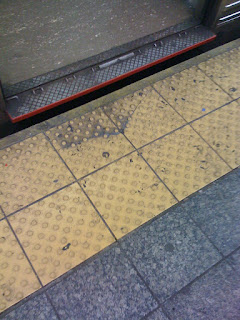
- Streetcar stops themselves will be raised slightly to make ingress/egress easier, but won't have full length platforms. They may or may not have platform strips.
- The LRVs themselves can be coupled into trains, but DDOT doesn't plan on doing so very often, and isn't designing stations with multi-car trains in mind.
- Potential coordination issues with Arlington over the Columbia Pike and Crystal City streetcars, and with Maryland over the Purple Line, have not yet been seriously considered, but will be so in an upcoming WMATA interoperability study.
- For the most part DDOT is planning to operate streetcars in mixed traffic with automobiles. However they are considering potential dedicated running ways on Rhode Island Avenue and M Street, SE, in addition to the K Street transitway. These issues will be worked out in the NEPA phase.
- Despite some problems with traffic signal priority on the existing Georgia Avenue bus pilot project, DDOT says they are working the kinks out and expect that signal priority will play a significant role in many of these lines. That would be great.
Overall the meeting was very informative, and very optimistic. I really hope DDOT can meet its objectives here.
There are still six meetings remaining, so there are plenty of opportunities to attend and comment.
Cross-posted on BeyondDC.
Comments
Bikeshare is a gateway to private biking, not competition
- Bikeshare is a gateway to private biking, not competition
- Judge denies injunction against closing schools
- Long-term closures: A solution to single-tracking?
- Public land deals have both benefits and pitfalls
- Metro policy for refunds after delays falls short, riders say
- PG planners propose bold new smart growth future
- Prince George's County struggles to get trails right
Sun May 26
11:00 am Roosevelt Ride in Greenbelt
Sat Jun 1
10:00 am CSG walking tour of Wheaton
Tue Jun 4
6:30 pm Height limit meeting at NCPC


I hope this gets some other jurisdictions in gear as well, as there are some great opportunities for cross-border operations here. Kudos to DDOT for pushing the issue.
by Alex B. on Oct 27, 2009 10:36 am • link • report
by цarьchitect on Oct 27, 2009 10:44 am • link • report
At least, that's my read.
by Alex B. on Oct 27, 2009 10:53 am • link • report
by Jasper on Oct 27, 2009 10:56 am • link • report
TIGER - The transportation arm of the stimulus package - stands for "Transportation Investment Generating Economic Recovery." Kudos to some congressional intern for coming up with that one.
LRV - Light Rail Vehicle. Basically, the streetcar itself.
by Alex B. on Oct 27, 2009 11:01 am • link • report
by Erik on Oct 27, 2009 11:05 am • link • report
I understand that they can't make the whole system separated, but at least 50% of it?
by Justin from ReadysetDC on Oct 27, 2009 11:12 am • link • report
Express stops and signal priority, but not exclusive right-of-way (with perhaps a few exceptions) -- as long as nothing goes wrong, streetcars should move a bit more quickly than buses.
I'm still concerned about reliability, though. What happens when a car breaks down in the streetcar lane? Or someone decides to use it for some "quick" unloading? Unlike a bus, the streetcar can't pass it in another lane.
I'd rather see exclusive or semi-exclusive right-of-way (e.g. shared with buses and taxis, reserved during peak hours, etc.). I guess my actual expectation was to have the streetcar in exclusive lanes in the middle of the road, like Boston's Green Line.
by Gavin Baker on Oct 27, 2009 11:14 am • link • report
by Simon on Oct 27, 2009 11:17 am • link • report
I'd prefer exclusive and semi-exclusive rights of way wherever possible, but that's not going to be possible everywhere. That's no reason to derail (pardon!) the project.
by Alex B. on Oct 27, 2009 11:18 am • link • report
by Gavin Baker on Oct 27, 2009 11:26 am • link • report
by Michael Perkins on Oct 27, 2009 11:30 am • link • report
by цarьchitect on Oct 27, 2009 11:33 am • link • report
The three vehicles already owned by DDOT are the same as the majority of the Portland Streetcar fleet.
These vehicles have three segments (each seperated by an articulation). The center segment, which has two doorsets on each side, is low floor. The floor matches the level of the sidewalk/platform. In Portland, there is a little bridge plate that quickly extends to allow for the boarding of wheelchairs.
The segments on each end of the car are a little higher and are accessed with two steps.
Portland is the best place to look to see how DC's streetcar system will likely appear and operate.
<<a rel="nofollow" href="arel="nofollow"href="http://en.wikipedia.org/wiki/Portland_Streetcar">arel="nofollow"href="http://en.wikipedia.org/wiki/Portland_Streetcar">http://en.wikipedia.org/wiki/Portland_Streetcar
<<a rel="nofollow" href="arel="nofollow"href="http://www.flickr.com/search/?q=portland+streetcar#page=0">arel="nofollow"href="http://www.flickr.com/search/?q=portland+streetcar#page=0">Flickr photos
<<a rel="nofollow" href="arel="nofollow"href="http://www.youtube.com/watch?v=xL7QEQuRqq0">arel="nofollow"href="http://www.youtube.com/watch?v=xL7QEQuRqq0">YouTube videos
by Matt Johnson on Oct 27, 2009 11:39 am • link • report
Here are the links again, without any html:
http://en.wikipedia.org/wiki/Portland_Streetcar
http://www.flickr.com/search/?q=portland+streetcar#page=0
http://www.youtube.com/watch?v=xL7QEQuRqq0
by Matt Johnson on Oct 27, 2009 11:42 am • link • report
by Rob on Oct 27, 2009 11:51 am • link • report
by Simon on Oct 27, 2009 12:02 pm • link • report
http://dc.streetsblog.org/2009/10/26/gop-senators-protest-evaluating-the-climate-impacts-of-transport-projects/, federal transit funding remains weak:
http://dc.thecityfix.com/tiger-grants-nt-a-transit-panacea/
DC would be much better served by going going this alone and raising the funds themselves. But the past is prologue. Even when DC went it alone on what should prove to be a comparatively less controversial alignment, they are still 3 years delayed.
by David Daddio on Oct 27, 2009 12:07 pm • link • report
will phase I be totally completed before Phase II starts up?
if the bidding process is separated, it seems likely that we could have concurrent projects, no?
how do the placement of stops get decided?
( please let their be stops close to my house)
by reflexive on Oct 27, 2009 12:33 pm • link • report
They will definitely need this, as well as tow trucks nearby on-call. There should also be large, clear signage that fines are issued immediately and that there is expedited towing.
While I agree that people will be less likely to double park when they see rails, some people truly do not care.
by Justin from ReadysetDC on Oct 27, 2009 12:44 pm • link • report
I know they emit less than diesel buses (but what about the new hybrids?), cost less to operate and maintain, and have a certain je ne sais qoui, contributing to their supposedly greater development and ridership potential, but I already live in a gentrifying neighborhood and ride transit. Perhaps some of the commenters can tell me how streetcars will benefit me and my neighbors in comparison to dedicated bus lanes with more frequent service? And will that benefit be worth the years of construction and billions of dollars in capital investment?
by xmal on Oct 27, 2009 12:45 pm • link • report
by Jasper on Oct 27, 2009 12:45 pm • link • report
Thanks for the writeup, Dan M. I planned to attend last night and got stuck at work. Did they mention what kind of frequencies they're planning?
by jcm on Oct 27, 2009 12:59 pm • link • report
The map of proposed routes, if you think about it, is really, really limited. What % of the city population could feasibly walk to a streetcar line and then walk to their destination? About the same number that could do so on the metro, since these routes are pretty dang redundant with the metrorail lines. That leaves huge swaths of the city in the same place they started.
I say, expand the circulator project: overlap express routes with local, get them going E/W along, say, 6 routes, target market it to the constituents that wouldn't usually use it. Market it to lenders, developers, franchisees, greens. If it's all a total failure, at least you don't have useless infrastructure everywhere. You can just as easily sell buses to eastern europe as streetcars.
by NAB on Oct 27, 2009 1:00 pm • link • report
Thanks for addressing those issues, Dan. Rhode Island Avenue is a great place to give the tracks their own lane. It's the only major road I can think of that actually gets wider crossing into DC from Maryland.
by Dave Murphy on Oct 27, 2009 1:05 pm • link • report
by monkeyrotica on Oct 27, 2009 1:23 pm • link • report
by Lee Watkins on Oct 27, 2009 1:47 pm • link • report
by kinverson on Oct 27, 2009 1:51 pm • link • report
According to DDOT, the projected service frequency is 7-10 minutes, but is subject to change as studies move forward.
by Matt Johnson on Oct 27, 2009 1:51 pm • link • report
by Lee Watkins on Oct 27, 2009 1:51 pm • link • report
Any way you want to craft services on those tracks, there are several spots with interlined portions of track that would see substantially shorter headways...
by Alex B. on Oct 27, 2009 1:57 pm • link • report
Anybody have any insight on the design-build contracting proposition? DC has some experience with this process now, e.g. the stadium and the convention center. Will it be to the city's (by which I mean all of our) advantage to do transport projects this way?
The timeline is wonderful - will we get infrastructure that lasts for an appropriately long useful life?
by pinkshirt on Oct 27, 2009 2:11 pm • link • report
I honestly don't see car drivers in the city _not_ blocking the tram lane if it's left open and up to their 'best behaviour'. I agree it should be $500 fine and 2 points on their license.
by James on Oct 27, 2009 2:51 pm • link • report
This street car thing is going to cost more, much more than the 1.5 billion the junior interns down at DDOT are discussing. All public works, infrastructure and transportation projects all exceed their "initial" estimates by a minimum of ~50%. Back in 2002, when the environmental assesments were being completed, the Silver Line was a 2.6 billion dollar project. It has literally doubled since.
The ridiculous stadium, again doubled in cost in only 24 months.
Mixing bowl, Wilson Bridge...I could go on for hours.
If the street car thing happens, it will be much closer to 3 billion in cost than it will be to 1.5.
by nookie on Oct 27, 2009 2:53 pm • link • report
Forget big parking fines and towing for vehicles parked on street car tracks. Just give the trains big bumpers and shove those miscreants' cars out of the way. And change the liability laws so that the idiot that left the car there is financially liable for all damage done when a streetcar moves the vehicle. After having a car pushed into a fire hydrant a few times, even lunkheads that collect dozens of speed camera tickets will learn.
by Stanton Park on Oct 27, 2009 3:01 pm • link • report
Still, if you park on the streetcar tracks and then leave your vehicle, the city should do the same thing that it does to the occassional nutjobs who lay down in the middle of the street -- arrest them for creating a public disturbance.
by tom veil on Oct 27, 2009 3:25 pm • link • report
I know it might not happen that often but we need to look at all things the best expectations and the extreme worst case scenario and be able to provide solutions to anything that can happen.
Streetcars might not have problems with people driving in lanes; but there will be problems with intersections and the occasional person who wants to commit suicide by jumping infront of a train.
Fines should be way more than $500 i say start at $5000 for all types of fines in general any amount a person could pay is not enough to stop them from doing whatever.
I say the amount of blocks between stops should differ between areas; in some places we have very short blocks and in others we have blocks that should be broken into 2 or 3 blocks.
The stops should be based upon distance in feet or yards between stations not blocks because it will ultimately have some stations closer together than others. Take many of the major streets in some portions the blocks are only a few feet and others there the equivalent of 2 or 3 blocks.
Any areas with structures such as tunnels/bridges/highways/hills should not be based on any number of blocks, they should be based on the safety of people getting on and off the train ( if there is a busy highway/road or a big hill or drop there should be stops at both ends regardless of distance to provide a safer environment to people.
by Kk on Oct 27, 2009 3:25 pm • link • report
by tom veil on Oct 27, 2009 3:33 pm • link • report
by Tim on Oct 27, 2009 3:44 pm • link • report
This is simply not true. Many rail lines/systems have come in well under estimates. I'm not as well versed in highway or 'other infrastructure' as in rail, but I know that projects routinely come in under budget. Of course projects of any type can wildly exceed their budget, but this is in many cases the result of a changing of the project, in other words, there have been additions/alterations (some politically motivated) that increased the final cost.
The recent financial crisis has thrown many projects into budgetary disarray, but to say that ALL projects ALWAYS exceed their initial estimates by a minimum of 50% is disingenuous.
One of the reasons that cities are pursuing streetcars is that the infrastructure costs are low. The point of streetcars is that, for the most part, they use existing streets. From what I can tell from this plan, the largest single cost is the new 11th St. crossing of the Anacostia, and I believe that is being paid for separately as a road/highway project. The usual suspects in cost overruns on projects of this magnitude are bridges and tunnels. This proposal appears to have neither (other than 11th).
The three streetcars that D.C. has purchased are identical to the Portland streetcars. There is a big difference between Light Rail cars and Streetcars, both length and weight. LRT requires almost two feet of subroadbed, or whatever the concrete track base is called. This almost always requires utility relocation, which is a huge cost just by itself. In Portland, the roadbed (I'm sorry I don't know the right term) for the streetcar is eight inches thick, and because of this, no utility relocation was required. I am certain that no relocation would be required in D.C., except perhaps for those hypothetical wireless areas around the Mall.
This proposal simply does not have the potential for large cost overruns, except for the streetcars themselves, and since this is a proven design, the probability of that is quite low.
'Why are there doors on the left side of the streetcar? '
The same reason there are doors on both sides of Metro cars. The trains just change direction at the end of the line, so the right side outbound becomes the left side inbound, and vice-versa. In the old streetcar days, there were often no left-hand doors, and the streetcars had to use a loop so that the doors would be on the right side.
by kinverson on Oct 27, 2009 3:52 pm • link • report
It's usually beneficial to have the flexibility to run the streetcars in both directions (i.e. driver at either end of the car). In that case, having doors on both sides allows this. Also, the D.C. cars will be existing models of streetcars instead of custom builds. Nearly all streetcar models today are bi-directional with doors on either side.
by Kidincredible on Oct 27, 2009 4:18 pm • link • report
by Tim on Oct 27, 2009 4:35 pm • link • report
I also believe that certain sections of lines will run in the center/left lanes, with stops placed in large medians... Therefore you would enter/exit on the left side.
by Justin from ReadysetDC on Oct 27, 2009 4:39 pm • link • report
This would also fit in line with the idea that the DC system would never run coupled cars, similarly to Portland.
Any idea if this is true?
by Tim on Oct 27, 2009 4:42 pm • link • report
by Paul on Oct 27, 2009 4:46 pm • link • report
7-10 years seems very optimistic. Much less complicated highway projects in rural areas take at least 7 years to get through the NEPA process:
Of course a highway project in a rural area would take longer for environmental review because you are greatly altering the environment. A streetcar project will not require as much of a review because it will be using city streets, not taking away grassland or anything like that. You don't need to do new(or maybe major) runoff studies or habitat studies.
by Rambuncle on Oct 27, 2009 4:54 pm • link • report
Please name 1 rail project in around DC, heck...on the East Coast of the United States that has either come in on or below budget.
When you can't find one, the please name one transportation project in DC, or the east coast that has come in on or below budget.
by nookie on Oct 27, 2009 5:09 pm • link • report
I've worked a lot with NEPA. There is far more involved in that what you'd think of as "environment". NEPA rolls in the entirety of the planning process including tons of social and economic factors, dozens of public meetings, engineering and alignment considerations, politicking, historical impacts, etc etc etc. This streetcar project will be one of the most complex NEPA projects ever initiated triggering literally thousands of stakeholders including different federal agencies.
by David on Oct 27, 2009 5:33 pm • link • report
http://www.planetizen.com/node/38721
by David Daddio on Oct 27, 2009 5:38 pm • link • report
Well, you didn't say that ONLY D.C. or east coast projects ALWAYS exceed their budget, so I was going to cite some western LRT projects. But now that I know you only meant this area, then I will just start with the Ft. McHenry Tunnel. Projected at $825 million, actually cost $750 million. Look, the point that I was making is that extras are constantly added to rail projects (and other projects), whether it is street beautification, or sound mitigation, or other things that have nothing to do with the initial transportation proposal.
As far as east coast rail projects go, perhaps they are all over budget. This may be because, in general, east coast cities are more built up, property values are higher, and any construction is more expensive. Plus the fact that rail projects take so long from proposal to construction, that material and labor costs inevitably increase.
Anyway, it was not my intention to get into an argument about other projects budgetary overruns. My point was that this proposal, because it has few large, expensive elements, is less likely to have cost overruns.
by kinverson on Oct 27, 2009 7:09 pm • link • report
It's a simple case of "which one of these things is not like the other" -- 8th Street is not like any of the other proposed street care routes which tend to be super busy commercial streets. BAD IDEA!
by Local Resident on Oct 27, 2009 7:37 pm • link • report
I don't think streetcars will change the nature of that street. In fact, streetcars used to run down 8th St. You'd be restoring the historic nature of the street. It is somewhat ironic that progress-averse Capital Hill residents want to keep them away.
It will make 8th St. nicer. Fewer cars and many fewer buses.
by Horace on Oct 27, 2009 7:55 pm • link • report
The thing is that the N-S connection through the Hill is a vital one, and there really aren't any commercial routes to do it on. 8th is located just about perfectly.
by Alex B. on Oct 27, 2009 8:32 pm • link • report
I also applaud the 4-5 block spacing for stops. That should keep people moving.
Any idea if the streetcar will be bike-friendly? It's nice to know that I can always take my bike on the bus and mostly take my bike in the metro (I've been stopped by a station manager for trying to go in at 6:30 PM on a weekday) in the event of a flat tire, etc.
by MrTa on Oct 27, 2009 9:53 pm • link • report
You are completely wrong. The Ft McHenry Tunnel was more than twice over budget. Originally slated to cost less than 400 million, like all transportation projects, it's cost skyrocketed.
http://www.dcroads.net/crossings/fort-mchenry/
"As construction progressed, the estimated cost had more than doubled to $825 million, but the project was completed under budget at $750 million"
Claiming something was less than budget, after that budget more than doubled the initial costs only a couple years before is pretty ridiculous no? It's like saying the DC Stadium came in on budget, and we all know that didn't happen.
Construction projects with large elements are the ones exactly ripe for cost over runs. Keeping your head in the ground and claiming all will be lollypops and rainbows with the cost of this thing is juvenile because as we've seen time and time again, that just isn't going to happen. This thing will cost 100% more, at a minimum when its complete.
by nookie on Oct 28, 2009 8:28 am • link • report
by Jack on Oct 28, 2009 11:50 am • link • report
by BeyondDC on Oct 28, 2009 2:27 pm • link • report
http://en.wikipedia.org/wiki/File:Bordeaux-tram-aps-near-Roustaing.jpg
Sometimes they ran 'in the median' ...
www.world-guides.com/images/bordeaux/bordeaux_tram3.jpg
Other times they ran in squares and streets closed to motor vehicles ...
www.transportxtra.com/files/3721-l.jpg
by Lance on Oct 28, 2009 3:37 pm • link • report
http://sf.streetsblog.org/2009/08/03/six-injured-when-historic-muni-streetcards-collide-with-suv/
bikes and rails:
http://sf.streetsblog.org/2009/07/24/eyes-on-the-street-when-bicyclists-get-derailed-by-streetcar-tracks/
once they're installed, its gonna be rough for a while. i foresee lots of crashes.
at least i'll be in the streetcar, and not in my own car. ; )
by a on Oct 28, 2009 9:43 pm • link • report
Can anyone explain the discrepancy? Thanks.
by Zac on Nov 1, 2009 11:11 pm • link • report
by David Alpert on Nov 2, 2009 12:35 am • link • report
Add a Comment