Links
Breakfast links: Inadequate public policies
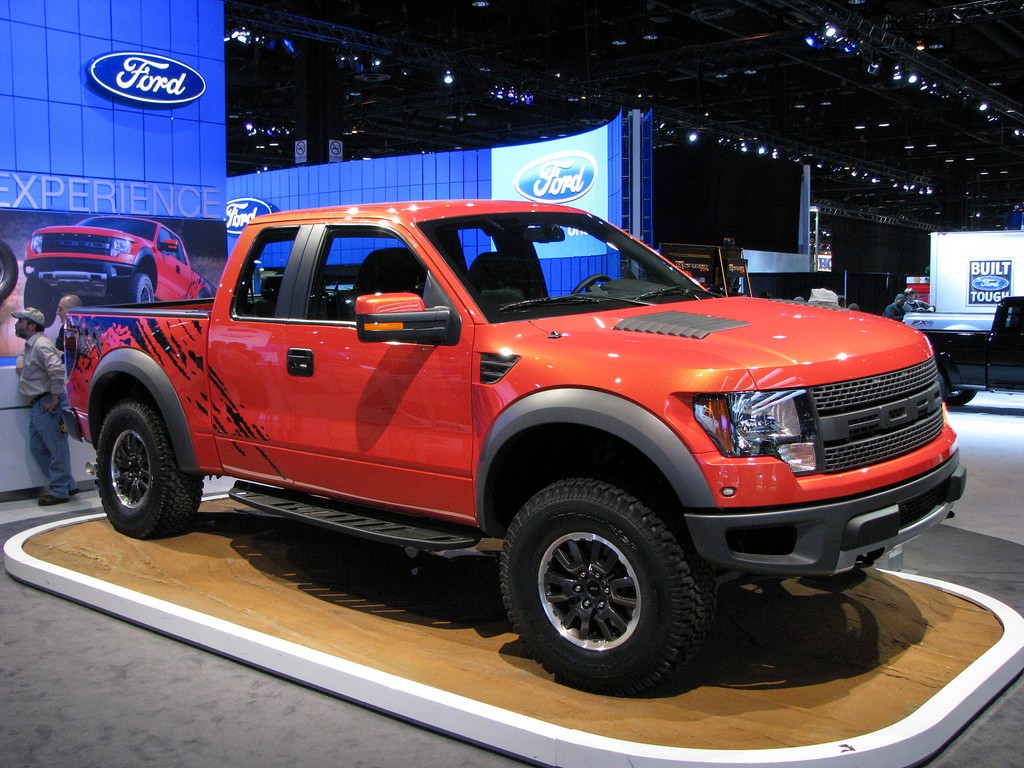
Cash for new clunkers: As many suspected, the "cash for clunkers" bill mostly just generated a lot of new clunkers. The most popular exchange under the program was trading in a Ford F-150 for a new F-150, which was just 1-3 mpg less terrible than the old model. Thanks so much, Barbara Mikulski! (The Washington Independent via Streetsblog Capitol Hill)
Carpooling recently illegal in Ontario: Virginia HOT lanes might penalize taxpayers if people carpool, but at least it's not illegal. Reader Chris noted that until recently, it was illegal to arrange carpools online in Ontario, Canada.
Inadequate for Elrich: Marc Elrich tries to defend Montgomery's Adequate Public Facilities Ordinance, the law that forbids development in denser areas because traffic speeds are more important than walkability. On Tuesday, The Council postponed a decision on whether to change the standard. Elrich also subtly attacks the White Flint plan as not caring about "the impact on thousands of people who use Rockville Pike." What about the thousands who use Metro there or the thousands who would use it under a more urban design? (Gazette)
Walking is transportation, even in Houston: The Houston Chronicle disagrees with the Harris County Commissioner who said sidewalks aren't important because they don't "get cars from point A to point B." The paper's editorial board writes, "Walking is transportation."
Wheelchair users will get taxis: A new pilot will bring 20 wheelchair-accessible taxis to DC starting in December. One potential side benefit of wheelchair taxis is that if they're cheaper to run than MetroAccess trips, localities could pay for rides on those instead of forcing people to use MetroAccess. (Examiner)
Performance parking is good for residents: Georgetown resident Cristina Ortiz wrote a letter to the Current against the rumored performance parking pilot under discussion by neighborhood leaders. (Here's the PDF of the paper; I can't open it at all, but maybe you'll have more luck). Georgetown Metropolitan replies with a little Q&A.
One burglar down: Dupont Circle had a wave of rooftop burglaries this summer. MPD finally was able to report that they've caught the guy. Apparently he took them around the neighborhood confessing to all his break-ins. (Bright Sparkly Jewels)
Have a tip for the links? Submit it here.
Comments
Bikeshare is a gateway to private biking, not competition
- Bikeshare is a gateway to private biking, not competition
- Judge denies injunction against closing schools
- Long-term closures: A solution to single-tracking?
- Metro policy for refunds after delays falls short, riders say
- M Street cycle track keeps improving, draws church anger
- Cyclists are special and do have their own rules
- O'Malley announces first projects using new gas tax money
Tue May 21
Sun May 26
11:00 am Roosevelt Ride in Greenbelt
Sat Jun 1
10:00 am CSG walking tour of Wheaton
Tue Jun 4
6:30 pm Height limit meeting at NCPC


Also, naturally someone with a pickup truck is very likely going to want another pickup truck. There are things an F-150 can do that a Prius simply can't. If I'm a person who does a lot of hauling, a Prius isn't going to cut it. It's not reasonable to expect truck buyers to switch to a compact, so the fact that they didn't shouldn't be surprising.
Looking at the numbers as a whole is the only way to gauge the success of the program.
by taylor.nmt on Nov 13, 2009 10:00 am • link • report
Judging by the facts that Ford managed to turn a profit in the last quarter, I'd say it worked.
Let's just remember that it was meant to be a quick shot in the arm for car makers. The thin veneer of greenwashing was always just that - thin. I'm just glad that most politicians talked about the benefits of the program in terms of stimulus, not the environment. At least that's somewhat honest.
by Alex B. on Nov 13, 2009 10:06 am • link • report
by BeyondDC on Nov 13, 2009 10:10 am • link • report
And yes, that datapoint about Ford 150 trucks is fairly misleading. If you drill down, you'll see that significant amount of truck owners bought cars.
In terms of the environment, I don't think cash for clunkers was designed to do anything. A 20 year old car is fairly clean -- assuming it still has a functioning cat converter. Many urban areas require EPA style certification to make sure it does. The number of older cars that don't use fuel injection that are being driven regularly is tiny. Sure, fuel traps and other leaks (oil, AC) are present in older cars but that isn't how we understand car pollution.
And the real benefit is lowering gasoline demand -- and yes, taking a MPG or two off a truck is a real benefit. And if I remember correctly, I only could find one or two cars that would have qualified -- a 96 LTD Ford, for instance, while almost all trucks did qualify.
by charlie on Nov 13, 2009 10:25 am • link • report
The evidence I've seen is that they are not really tracking curb occupancy, not communicating the data with the public, and when the occupancy is clearly outside of the legislated target they fail to adjust the prices either up (in the case of Columbia Heights) or down (in the case of the ballpark).
They also tend to treat all streets in a zone as identical, as in the case of 8th street SE compared to M St SE, which are the same price even though the demand is completely different.
by Michael Perkins on Nov 13, 2009 10:29 am • link • report
I am somewhat disappointed that that you chose a quote from the article that paints the program in a bad light. If you had chosen the quote about how the average trade resulted in a change from 15.8 mpg to 24.9 mpg it would paint a completely different perspective.
by Matt R on Nov 13, 2009 10:58 am • link • report
My point was twofold. One was that looking at the "most popular trade," particularly in a case where it's a vehicle with special functions, is a misleading way of evaluating the program, and only really serves to generate a sensationalist but unenlightening "hey, look, isn't government dumb" headline. Also, given the lack of tight environmental standards, cash for clunkers was more effective environmental policy than might have been expected.
by taylor.nmt on Nov 13, 2009 11:24 am • link • report
Which is the long way of saying that small, incremental mileage increases for gas guzzlers tend to have much larger effects than one might expect.
by jcm on Nov 13, 2009 12:03 pm • link • report
MPG is not actually the best way of measuring the effect of fuel economy improvements. It's too easy to make the mistake of assuming that changing a 10 mpg truck for a 13 mpg truck is the same as changing a 25 mpg car for a 28 mpg car. It's still just a 3 mpg difference, right?
Wrong. The measurement that shows the real difference is how much gas it takes to drive a mile, not how many miles you can go on a gallon of gas. Bumping up your fuel economy from 10 to 13 mpg is a much larger change in your fuel usage per mile than bumping up from 25 to 28. Holding your transportation needs approximately constant (about the same number of miles) an incremental change makes a much bigger difference at the low end of the fuel economy spectrum.
Now of course, it's much better if people switch from their 10 mpg truck to the 28 mpg car, or better yet, to the 600 mpg equivalent METRO. But if I had to choose between a 3 mpg increase for someone driving an F-150 or a Camry, the F-150 wins.
by taylor.nmt on Nov 13, 2009 12:22 pm • link • report
by YIMFY (Yes In My Front Yard) on Nov 13, 2009 3:18 pm • link • report
by owlafaye on Nov 14, 2009 7:53 am • link • report
More germane, can you please tell us all how this is racism. I'm having a hard time figuring out how race plays into the "cash for clunkers" program.
by TimK on Nov 14, 2009 9:10 am • link • report
by Froggie on Nov 14, 2009 9:33 am • link • report
Racism is deep seated in America today.
Blog? OK...shut it down and get a job. I am amazed at how many people glom onto all this crap about the clunkers program. Stimulus means SPENDING MONEY...an insignificant number of people took advantage of the program to buy another gas guzzler. Obama is doing a large number of things on every front to improve the economy...they ALL cost money. Instead of nit-picking every damn little thing, columnists (bloggers) like David Alpert, do not have to account to anyone of course, uncredentialed and without a news organization behind them, they can come out with any rumor-of-the-day they please. I don't see Alpert offering anything to his country's improvement...no constructive ideas, no support for a struggling administration...essentially a pretend leader calling to all the local wolves to try and drag down this falttering animal of an economy...
by owlafaye on Nov 14, 2009 1:26 pm • link • report
No, wait! Almost drew me in there! Whew, that was close.
by TimK on Nov 14, 2009 1:59 pm • link • report
by Neil Flanagan on Nov 14, 2009 6:04 pm • link • report
As if all the plan did was generate new clunkers? you having problems seeing what I am seeing?
That is an off-the-wall, extremely dishonest statement and it sounds like Obama bashing.
Reason? My off-the-wall accusations of Obama-burning from the right wing South seem to fit this quip. He pulled this inanity from some Obama-burning media stream without checking the facts. Makes him just as guilty. A blog making news? Laughter...lets see his news license, diploma and journalistic qualifications.
by owlafaye on Nov 15, 2009 12:35 am • link • report
If it forces public officials to A) interact more with the public (to slow down/stop rumor spreading), or B) provide actual FACTS and DATA, in order to "counter" the rumors, then I see it as a net plus...
by Froggie on Nov 15, 2009 8:04 am • link • report
Add a Comment